Reframing the narrative about dementia
Active minds is a mental health care company creating innovative products specially designed for people living with dementia.
Summary
“Worldwide, around 55 million people have dementia, with over 60% living in low- and middle-income countries. As the proportion of older people in the population is increasing in nearly every country, this number is expected to rise to 78 million in 2030 and 139 million in 2050”
(WHO, Dementia)
The need for people living with dementia and their carers to be able to find solutions and support has never been greater and part of the solution lies in Active Minds’ commitment to channel shift - giving carers a reason to use a direct online service rather than through more traditional methods of contact.
The new bold new approach to a direct customer service requested a change of startegy and going through a complete rebranding and digital transformation process.
My participation
My role was to build the new Relish website from scratch, redesign the existing wellbeing app and improve its user experience. I was also responsible for translating the Relish core visual language to all digital products and communications and to design their digital content strategy.
We are Relish ( previously Active Minds)
Active minds was an established brand name. We wanted to find a new brand name that would hint to the emotional connection with our audience and distinguish Active Minds in their sector. We were still doing innovative products but, also, helping people with dementia and their carers to cherish their moments together after the diagnosis. The emphasis was put on connecting and sharing positive experiences.
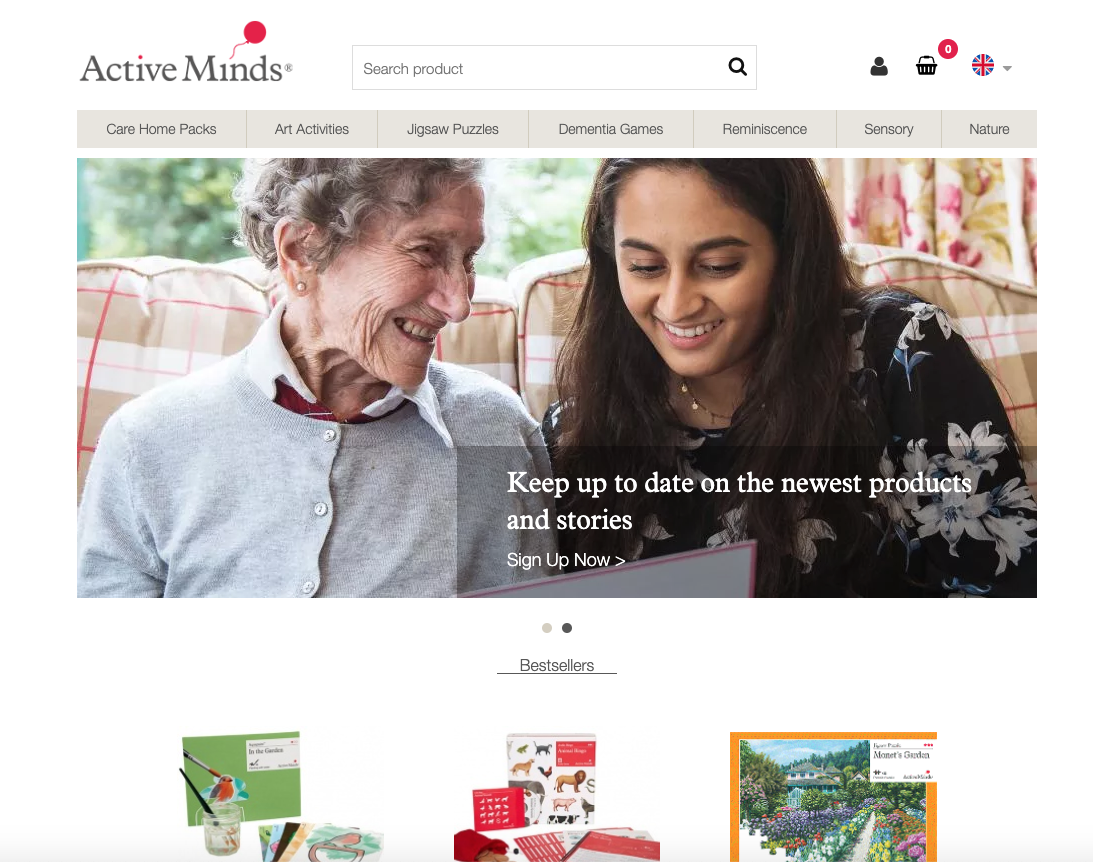
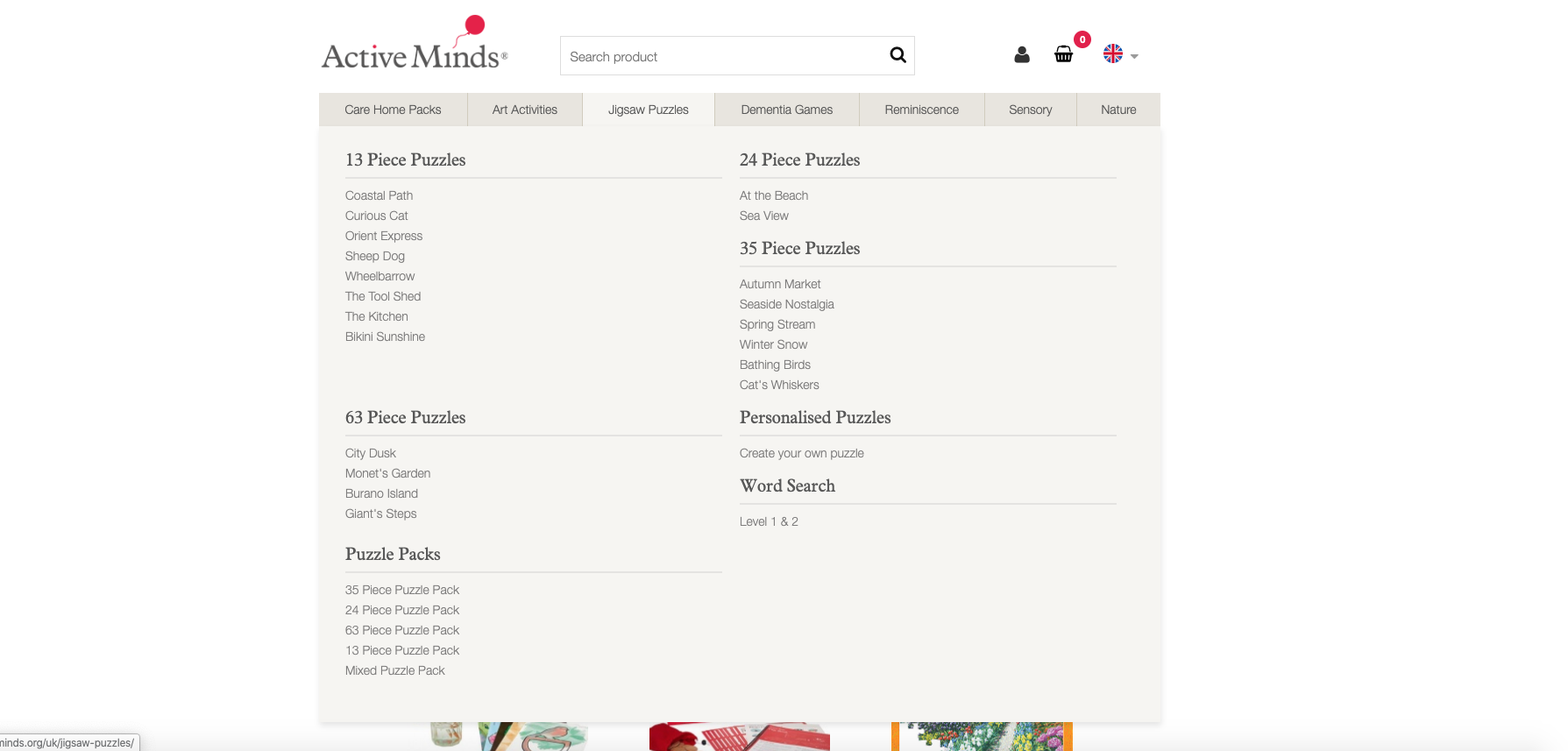
The previous website had an institutional look and feel. There was no clear way-finding and valuable content was difficult to reach.
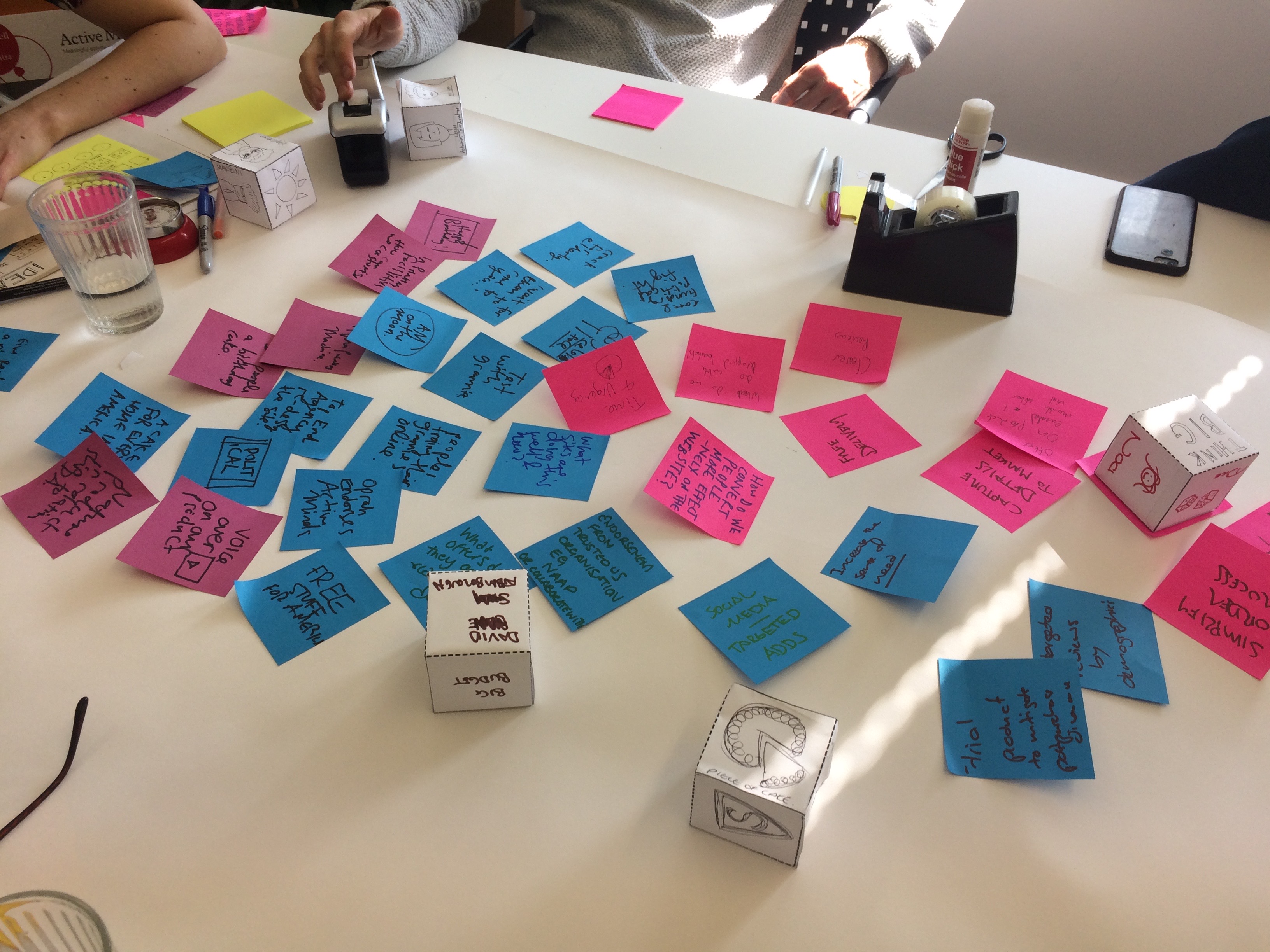
Bussiness perspective: Are the existing products matching the user’s needs?
Finding our name
Challenge:
Understand the brand
What are the brand’s core values? What changes need to be made to align with the core values? Are the name and design principles represantitive to our new proposition?
Solution:
To make sure our values align with the new name and identity a series of workshops were organised with the team; the research insights were presented before brainstorming and come up with ideas.
An external agency was commissioned to help us with rebrand; they conducted their own research additionally to ours and came up with proposals.
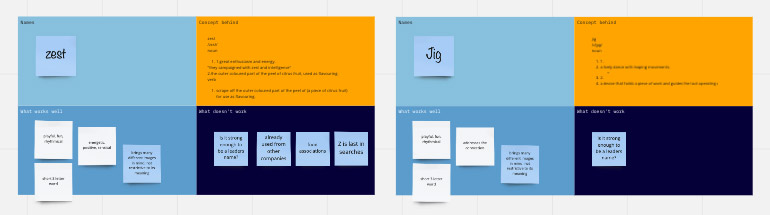
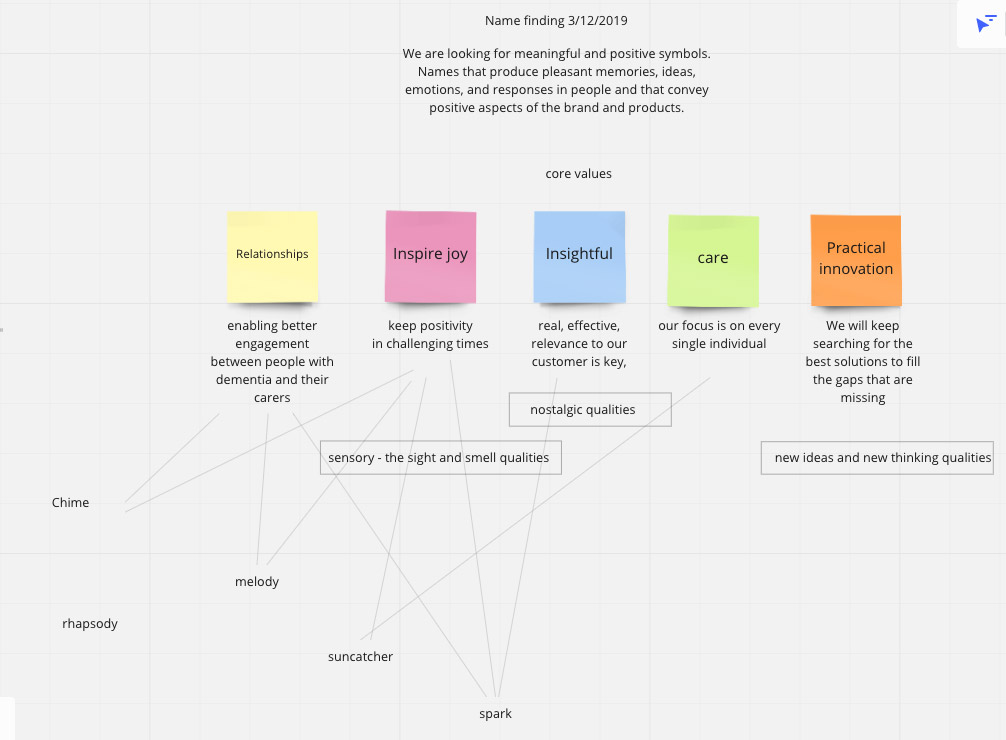
Name finding workshop:
Each function had their own thoughts on who we are. Taking in consideration the feedback from the consumers we came up with words like spark, chime and zest. Finally, it was “relish” that was voted as the best option. Like the new name, the branding was designed to help the company stand out and distinguish its specialized focus in dementia wellbeing and bring a humane joy to an often harsh environment.
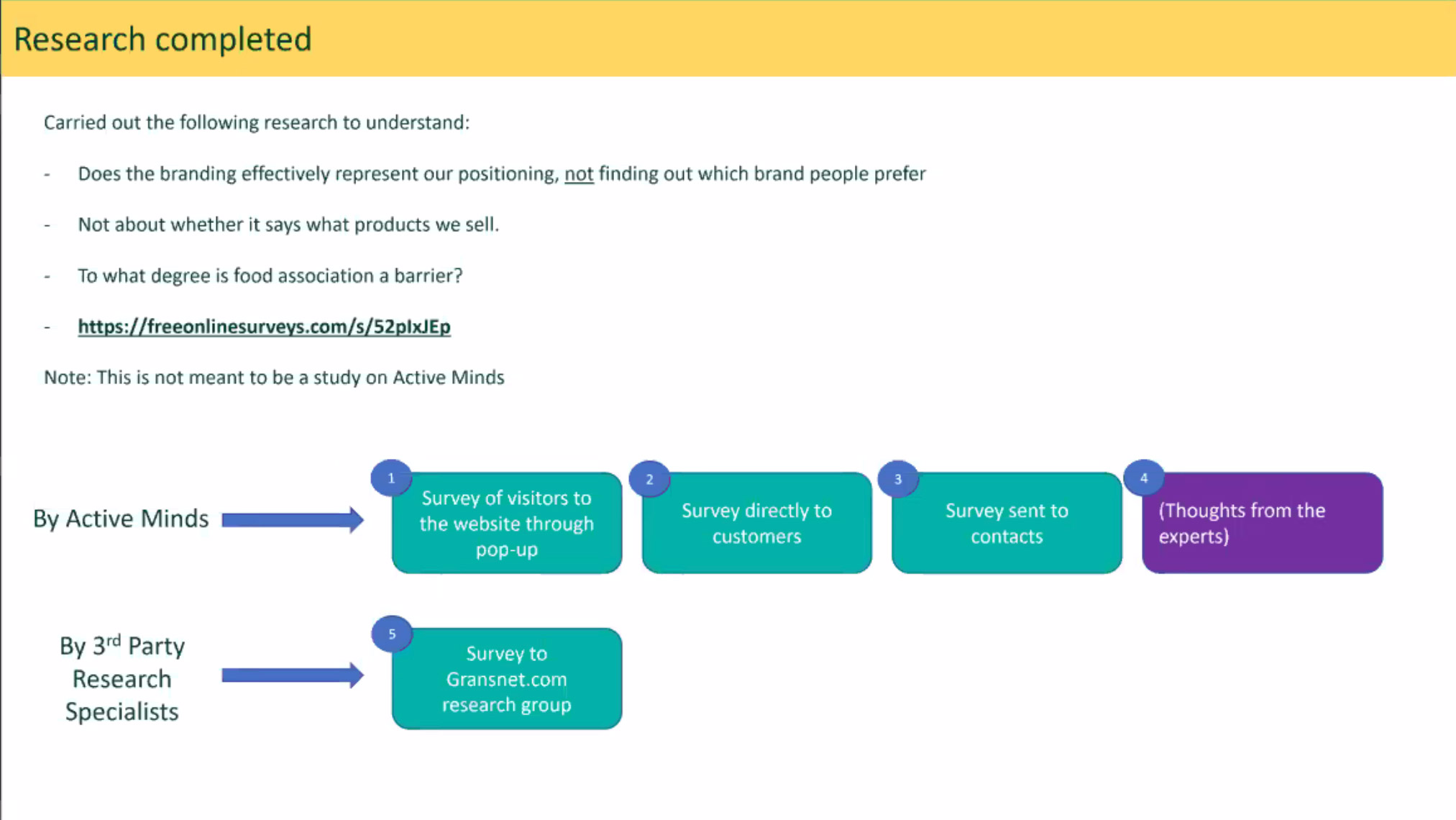
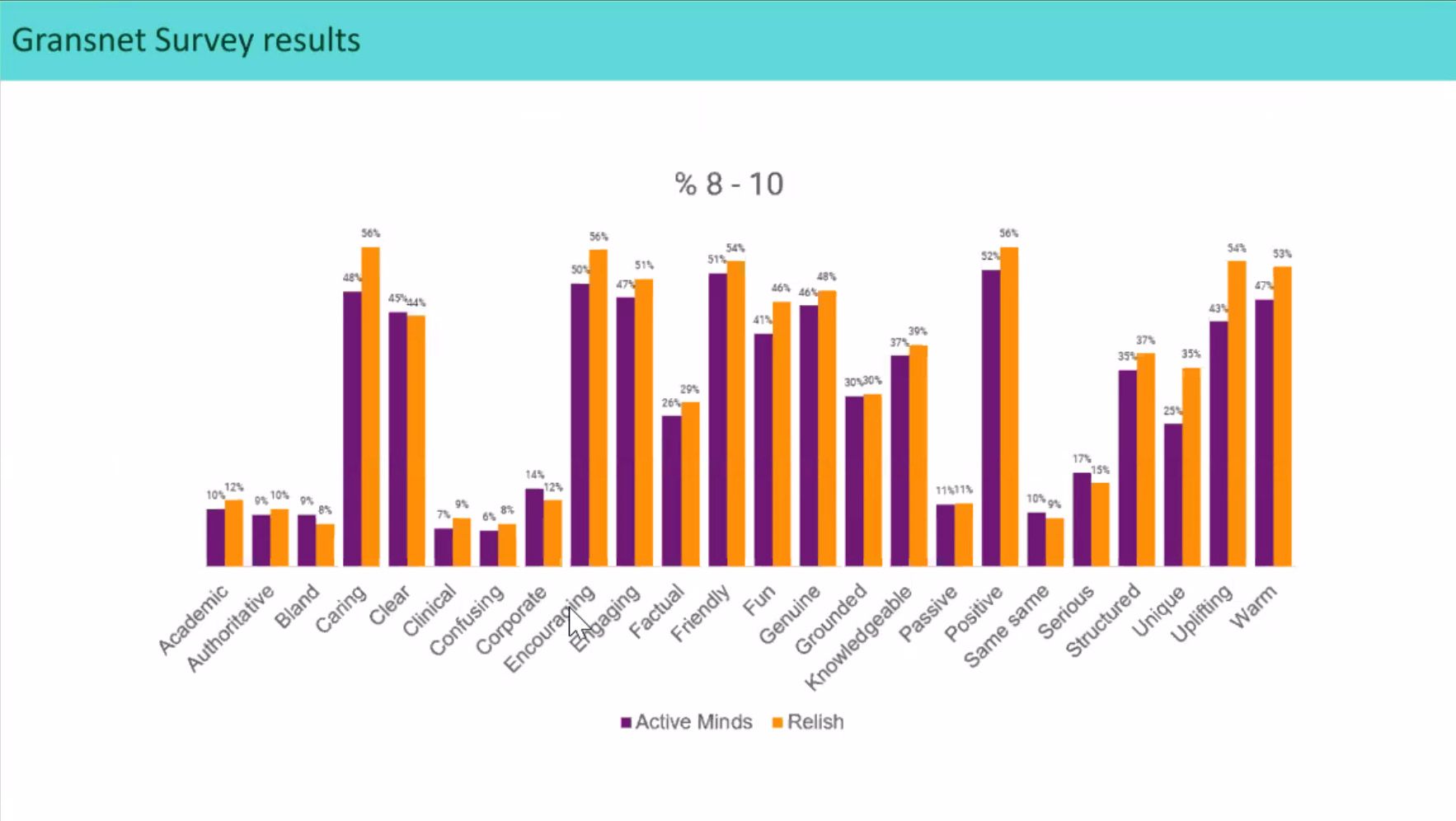
To see how our new name was perceived by the audience we run some tests; we conducted surveys from our own website and through third party research specialists relevant to our audience.
 New brand name and identity
A challenging new audience:
Focusing on the user
The challenges I faced from the start of the project were that the product was niche, targeting a specific section of the health and care industry, there was no real competition and the only research findings I had from previous reports and the AM website analytics were based on care home users and therefore, focusing on the needs of the professionals.
I had to conduct my own research; The first months were spent discovering who is the consumer; where do they come from, what are their needs, desires and habits.
Challenge:
Understand the audience
Who is our audience, what are their goals and desires. What problems are we trying to solve?
Understand the audience
Who is our audience, what are their goals and desires. What problems are we trying to solve?
Solution
Learn users’ needs, desires, demographic info, digital literacy and habits
A UX audit was performed and evaluated. Research methods used: In depth interviews, surveys and task analysis, user recordings, customer log launch, evaluative research.
Learn users’ needs, desires, demographic info, digital literacy and habits
A UX audit was performed and evaluated. Research methods used: In depth interviews, surveys and task analysis, user recordings, customer log launch, evaluative research.
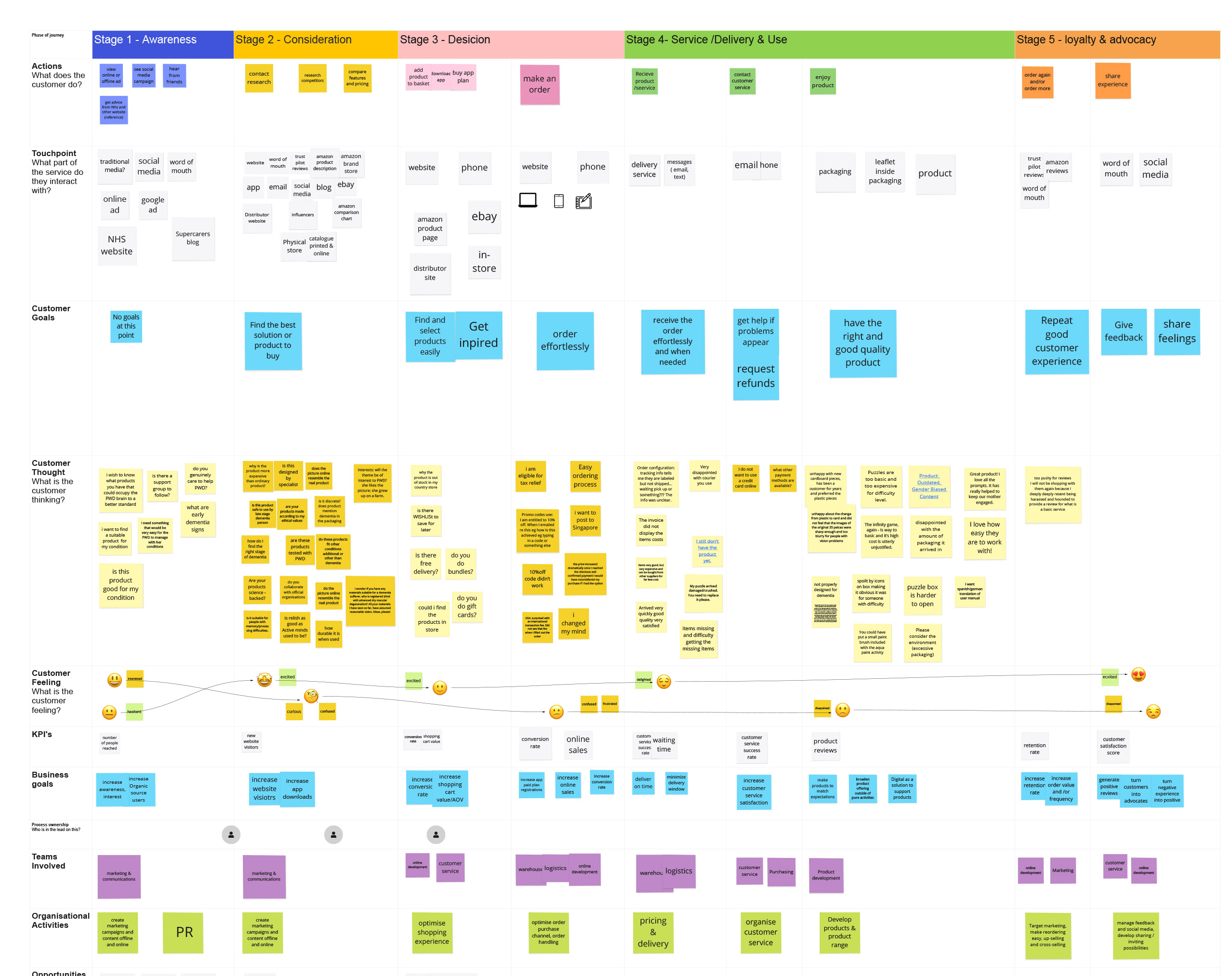
Customer Journey map
Although the classic depiction of the customer journey is a linear funnel, todays reality is not a predictable, progressive path.
When thinking of the Relish costumer journey, it was conceived as a holistic experience, with customer’s exiting and re-entering at various touchpoints- not because they are frustrated or disengaged but because this is the nature of the reality.
Most consumers are not clear about how to get from a problem to a solution. What this suggests is that customers are searching for information. What they need and when they need is content specific.
Customer Journey Plan with empathy mapping
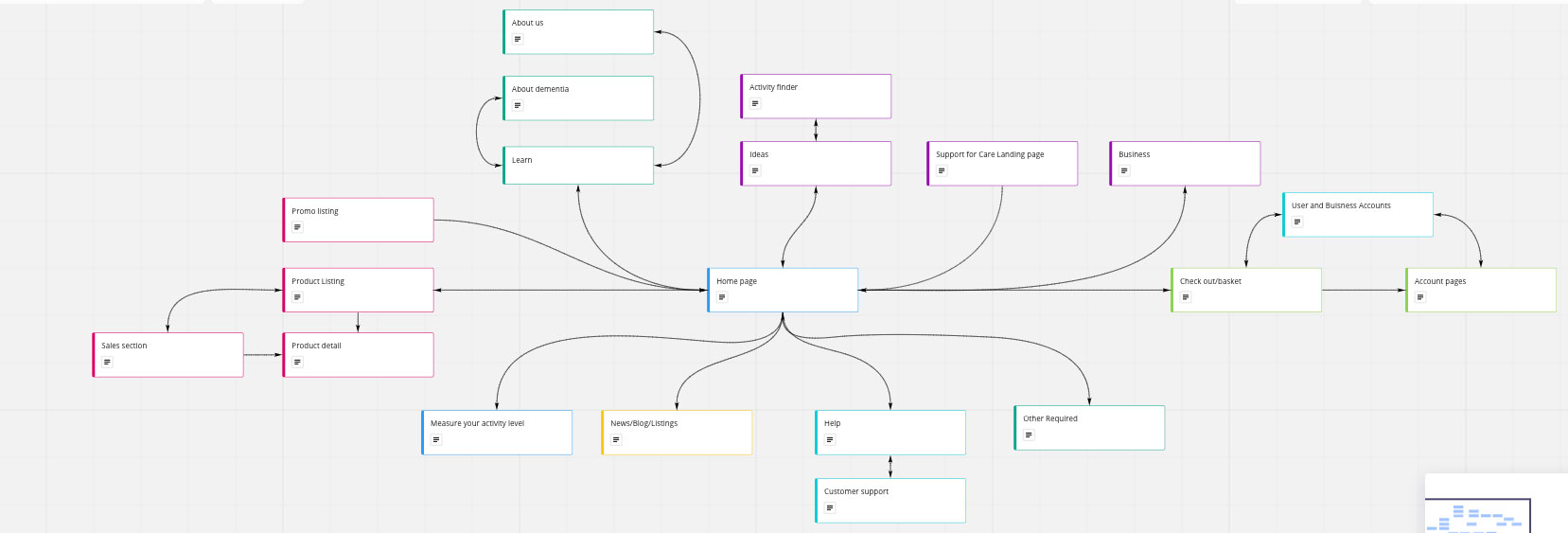
The website structure
![]()
Defining the features:
A description of the functionality of what the site must include was created to meet the user’s needs.
The aim was to build an e-commerce website with a clean structure that could be easily scanned and ranked but, also, to help the user discover and browse easily through all the Relish content.
My goal was to focus on the content; the content would then drive design and structure.
Through user research and by analysing the site metrics I had an understanding of what the user’s needs were and how they think and speak about the subject of dementia. The content would be created and structured based on that. This would also help us later with the SEO.
Content Strategy
The question was what kind of content do we need (topics, types, sources, etc.), and what messages does content need to communicate to our audience? How is content prioritized, organized, formatted, and displayed?From my interviews with family members, carers, care home personnel and people living with dementia I discovered three ongoing themes; the consumer wasn’t always familiar with our products and wasn’t sure of how and what it was helping them with; the majority of users didn’t know much about dementia; the user often came to us for help and support.
The navigation
Prioritise, organise, categorise
We had the structural design in place, then the quest was how to design the presentation of the information to faciliate understanding.
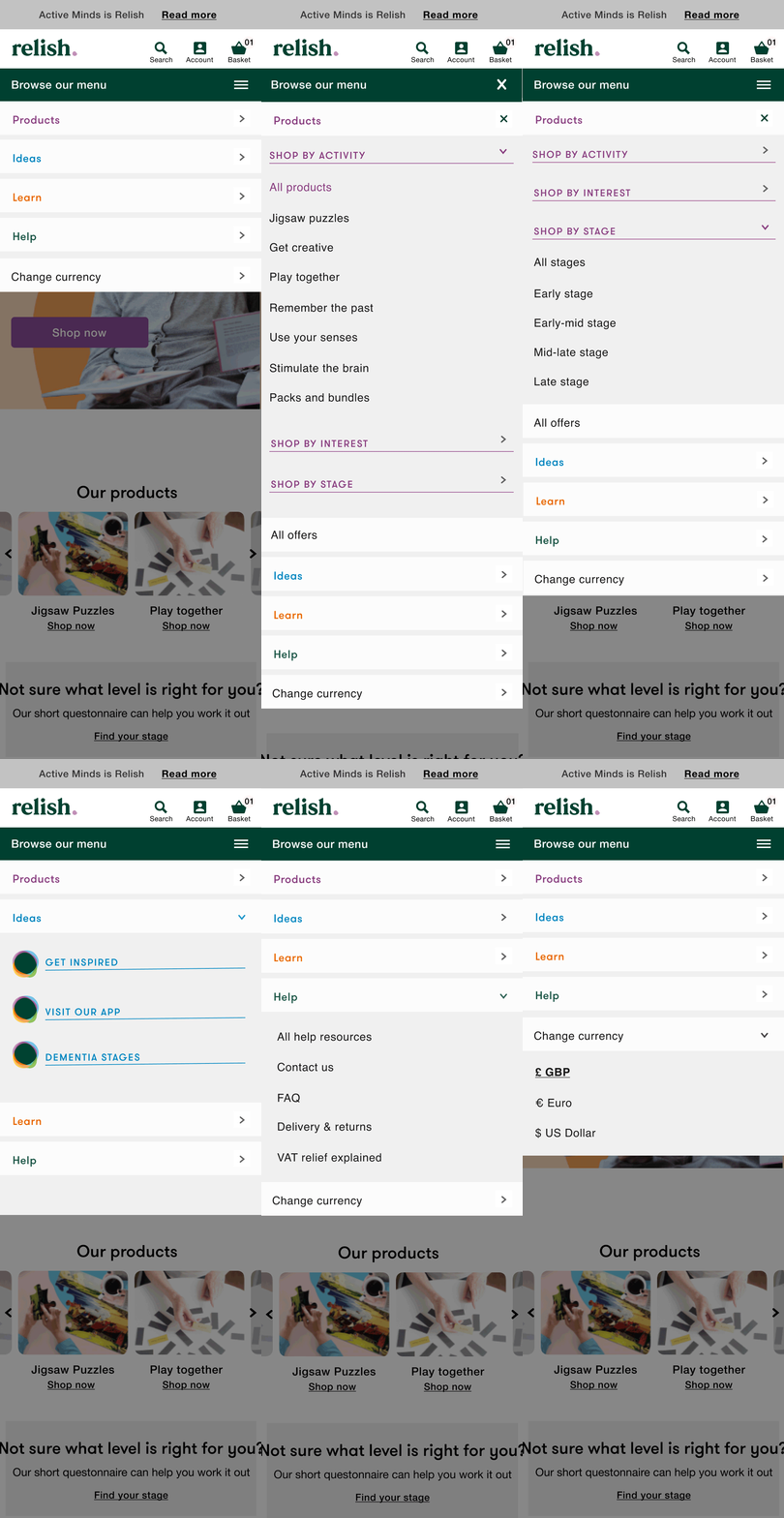
To address the different users’ needs we separated the content into four pilars; the activities (the shop), ideas (the app), learn (blog, podcasts, learning videos and more) and Help sections.
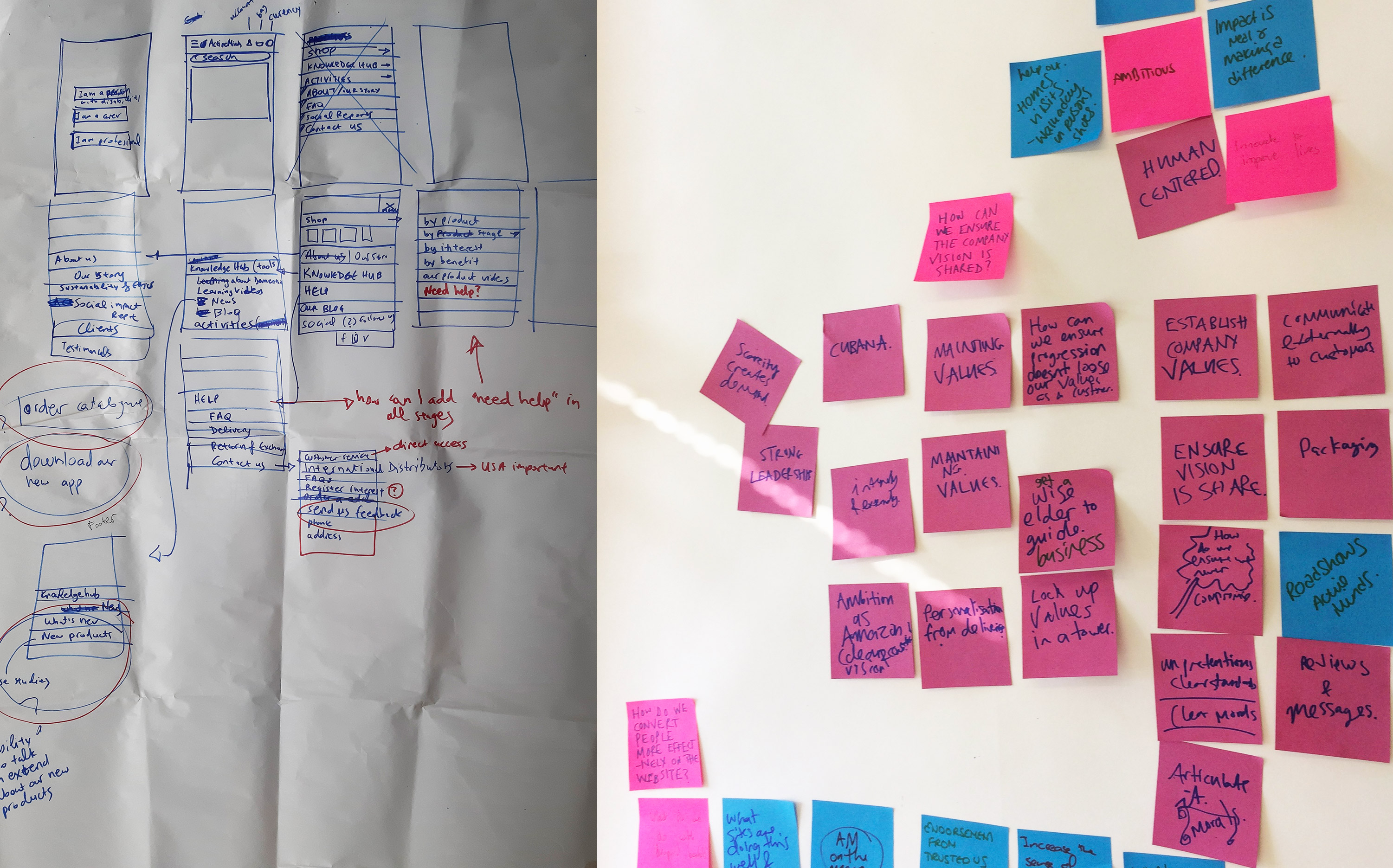
Whiteboarding sessions with the team helped me formulate a new way of showing the company’s products and services. The taxonomy I created was tested with a variety of users and amended accordingly.
To address the different users’ needs we separated the content into four pilars; the activities (the shop), ideas (the app), learn (blog, podcasts, learning videos and more) and Help sections.
Whiteboarding sessions with the team helped me formulate a new way of showing the company’s products and services. The taxonomy I created was tested with a variety of users and amended accordingly.
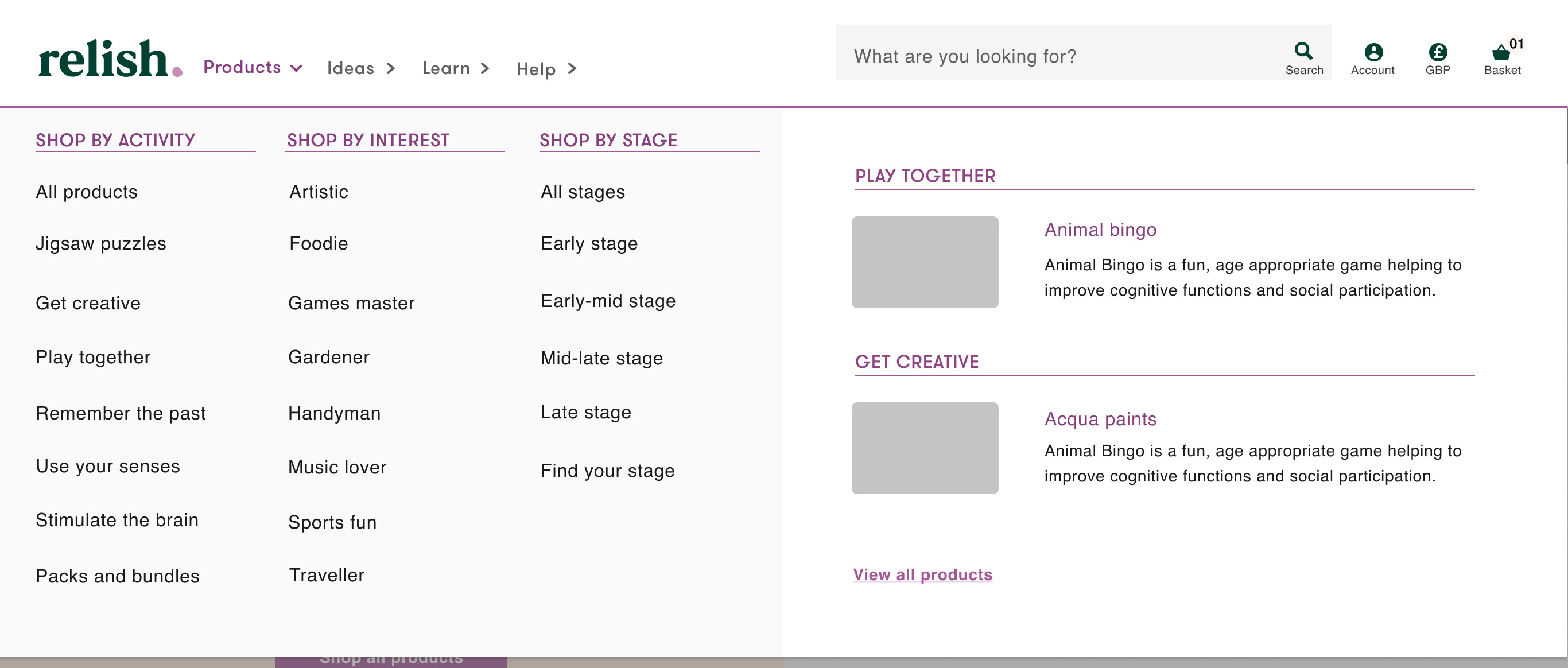
Great attention was paid to the activities section. How
could we help people choose?
The user feedback and recordings from the Active Minds website revealed that the consumer was often confused, didn’t know what product to buy for their condition.
Based on the findings of the research I created two different scenarios of organising the content, which were then tested via card sorting method, with a group of people, that reflected our main consumer segments, to see what makes sense to them. The results gave us great insights on the information architecture.
The user feedback and recordings from the Active Minds website revealed that the consumer was often confused, didn’t know what product to buy for their condition.
Based on the findings of the research I created two different scenarios of organising the content, which were then tested via card sorting method, with a group of people, that reflected our main consumer segments, to see what makes sense to them. The results gave us great insights on the information architecture.
Accessibility
An important factor when designing the navigation, style guide, content and website features was to make sure that we took in consideration the needs of our audience. Since Relish’ mission was to increase the wellbeing and empower the people living with dementia and their carers, this had to be reflected on our digital products, they should be easy to use by as many people as possible. All design elements, including colour, contrast, type standards and size of buttons, were carefully selected to make sure that the website was meeting the accessibility requirements. The content was created to be presented in many different ways, including
assistive technologies. An accessibility page was created to guide people make the best use of the website.
Style guide
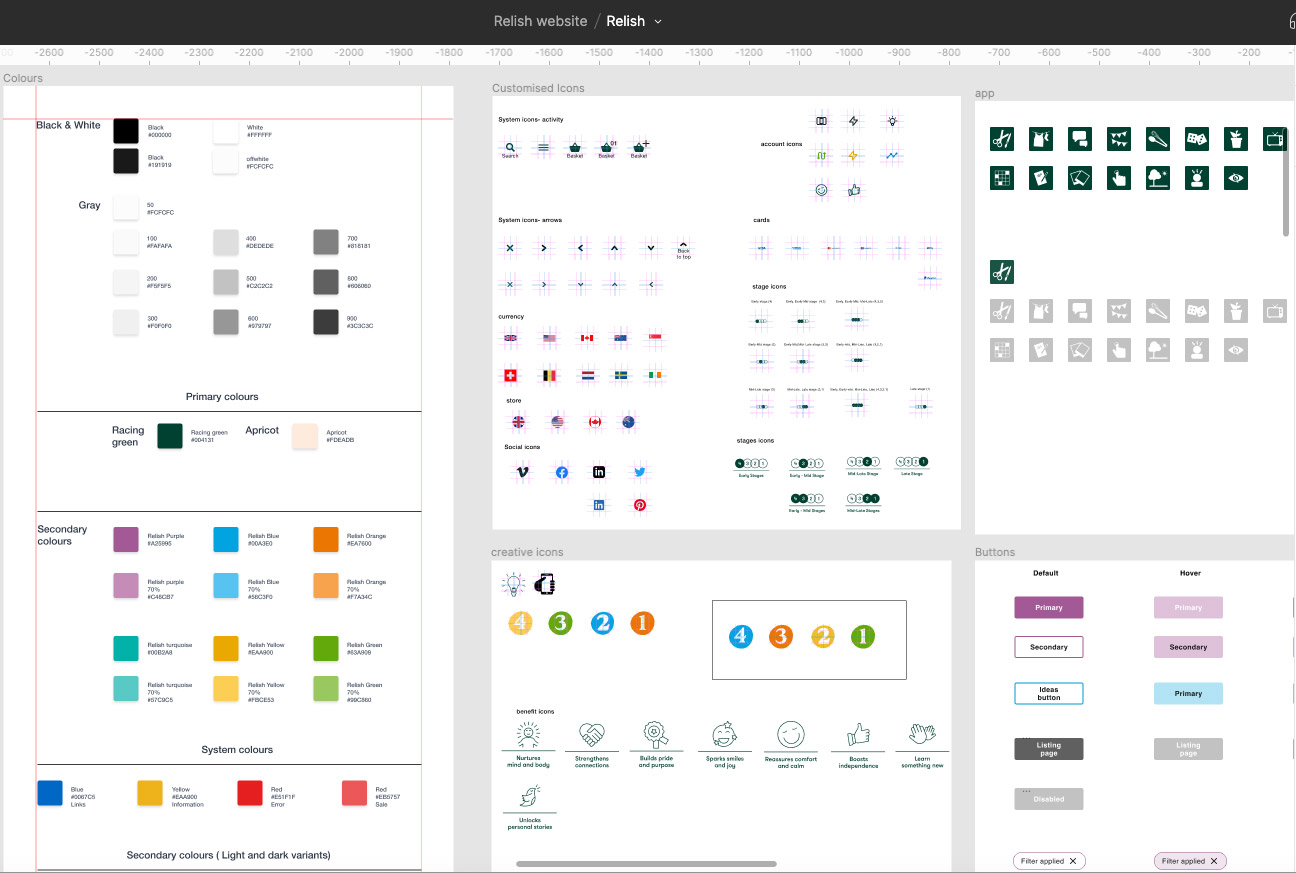
All the UI elements were carefully designed and tested with users.
Read more about the Relish design system here
Wireframes- user flows- prototypes
We had a tight deadline to meet. The business goal was to launch the website by September 2020. This meant we had to make sure we work in the most flexible and adaptive way. I proposed to work in sprints with the developers’ team and then run weekly workshops with the Relish team key stakeholders to inform them of the progress, help them understand the process and also get their thoughts on the parts that I needed their input.
Read more about the website product design here
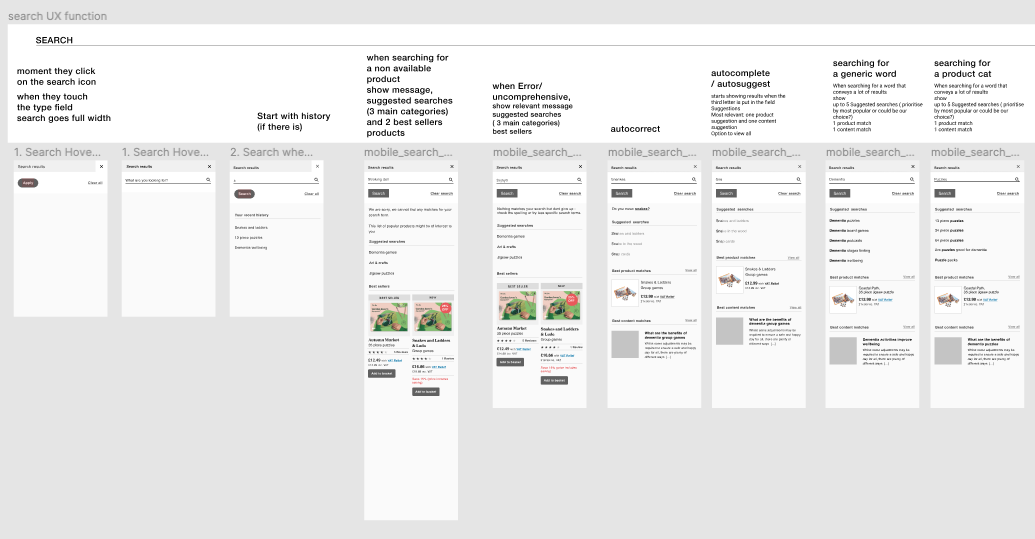
Example: The search function
The website has launched!
Testing, recordings and iterations
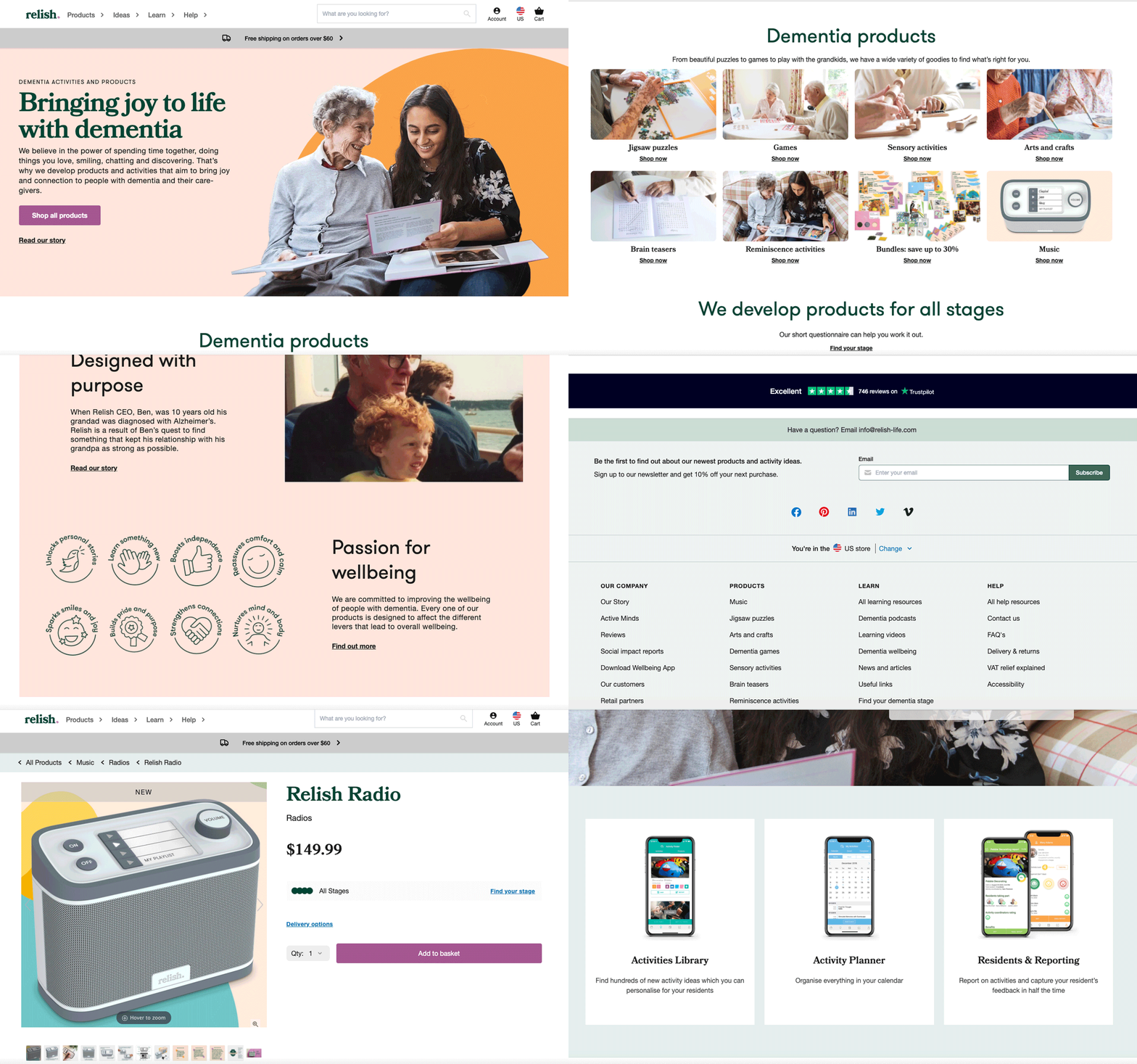
The website was launched September 2020, 10 months after I started working on the project. Some features were not completed on time but we decided to go ahead with the launch and continue improving the UX and adding content while it was live. The rest of the features would be implemented in Phase 2.
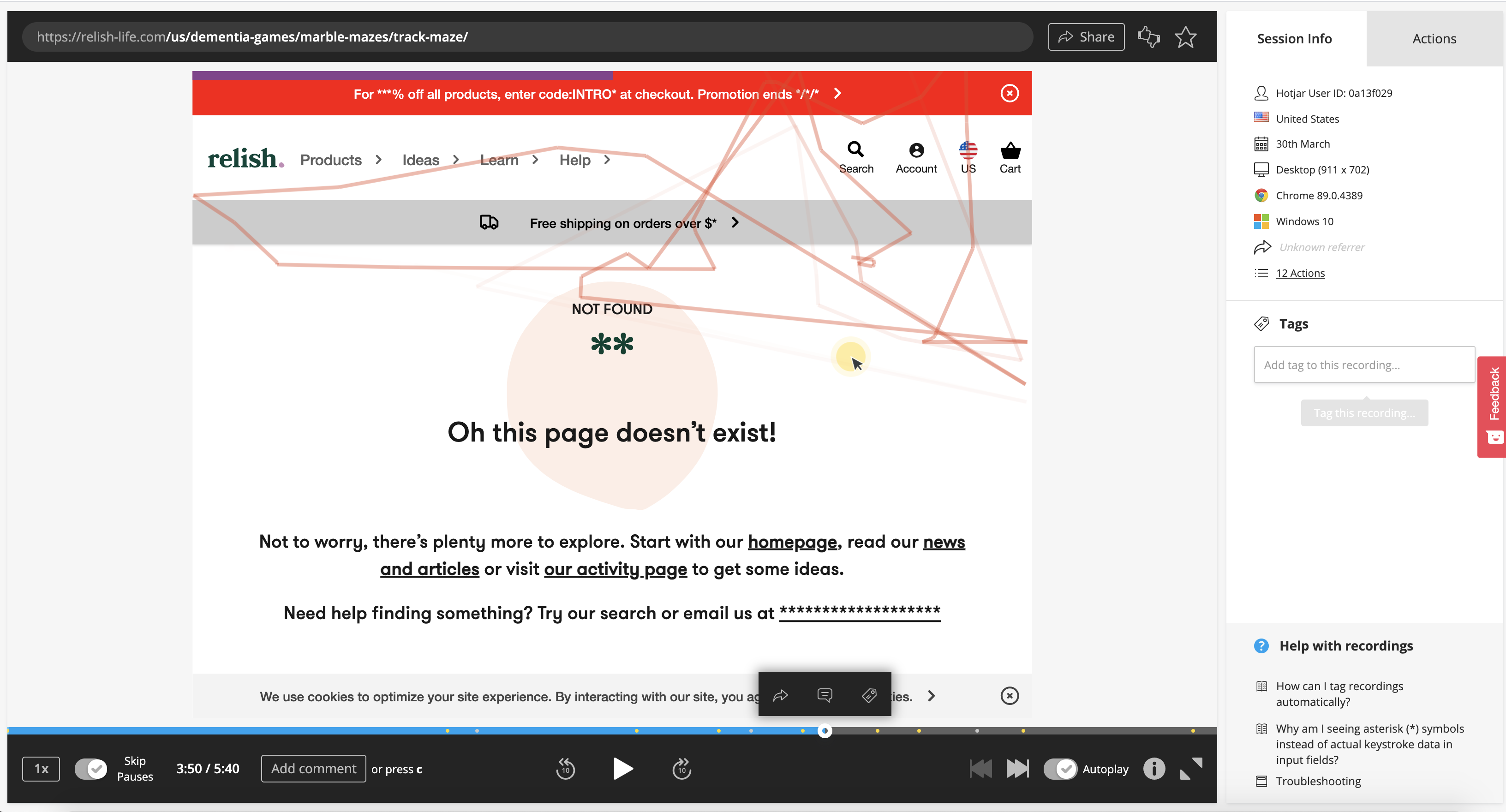
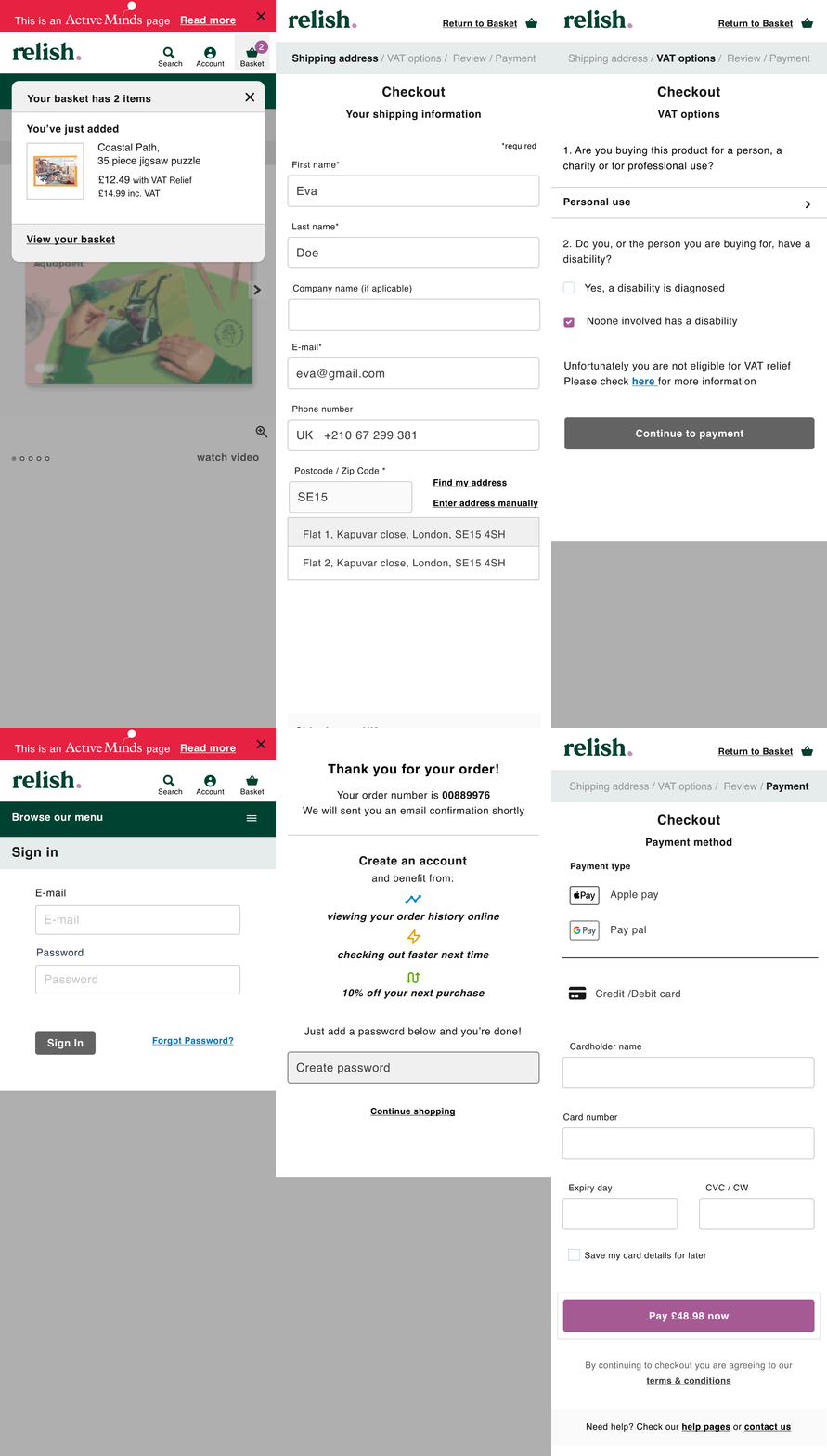
A few months later we had to redesign the whole checkout process, disable the “choose currency” feature and introduce a choice for store. There was an ongoing conversation with the developers; I would check regularly the users’ recordings, spot any errors and provide solutions to the devs team.
The results
As a result of the new way of showcasing the Relish product and services offering and with the easy-to-use navigation (megamenus, breadcrumbs, labelled navigation on the homepage, shop by stage and interest features made a big difference) the consumer was engaging more and for longer. The conversion rate went up, as did the AOV. There was a jump in user retention and also a better google ranking which helped increase our organic traffic. The “more like this” addition of cross selling products on the product page helped to bring down the drop-offs. The duration and depth of visit increased.
The Relish well being app
![]()
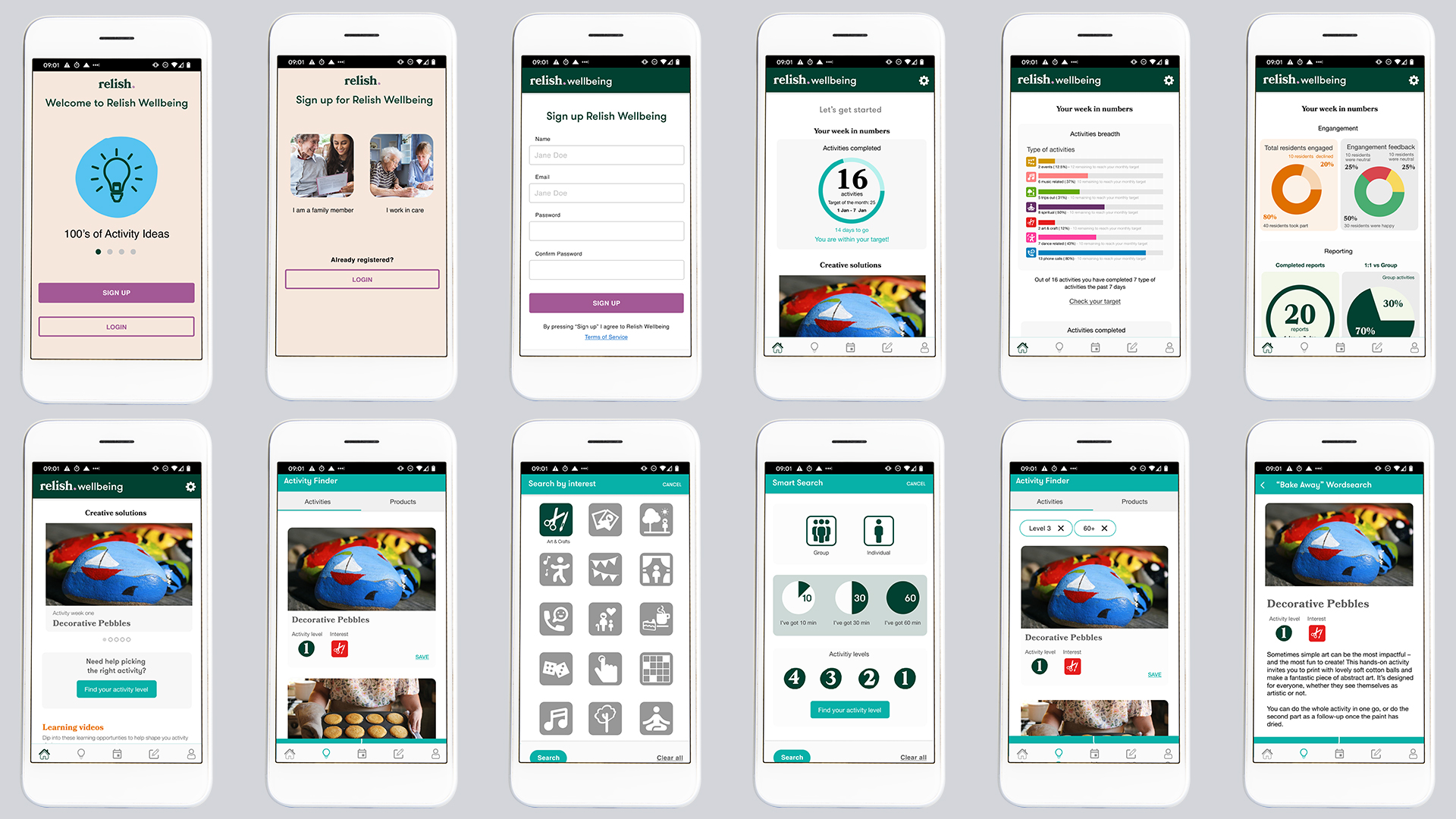
The app was designed to support all the role of the lifestyle and activity coordinators within care settings. I was tasked to rebrand and redesign the App and improve the user experience. A new logo and visual identity were created. After research and test with the app target groups new features were added that will help the carers save time and the managers to easily identify the results.
Read more about the app
Read more about the app
Creating relevant and enganging content:
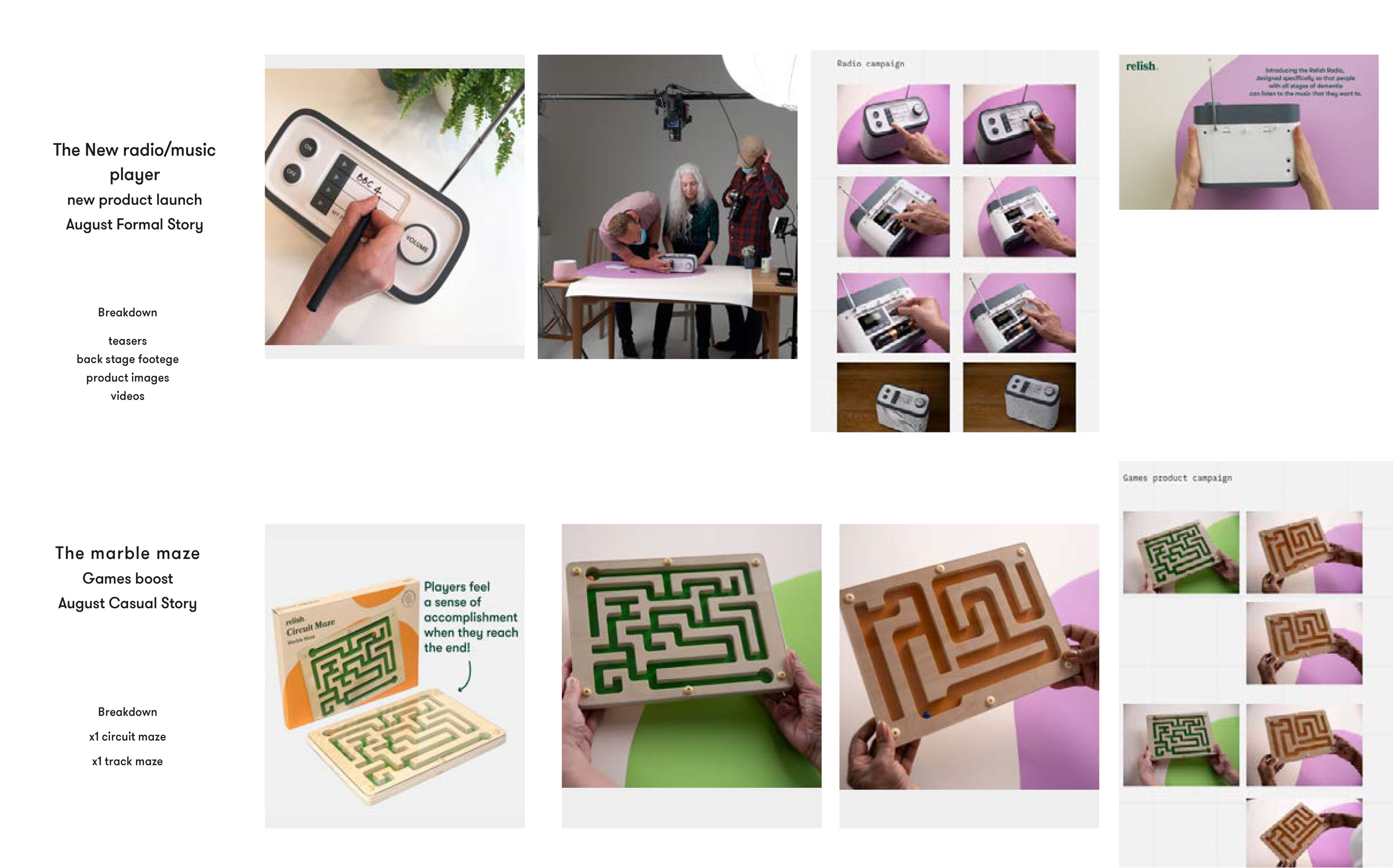
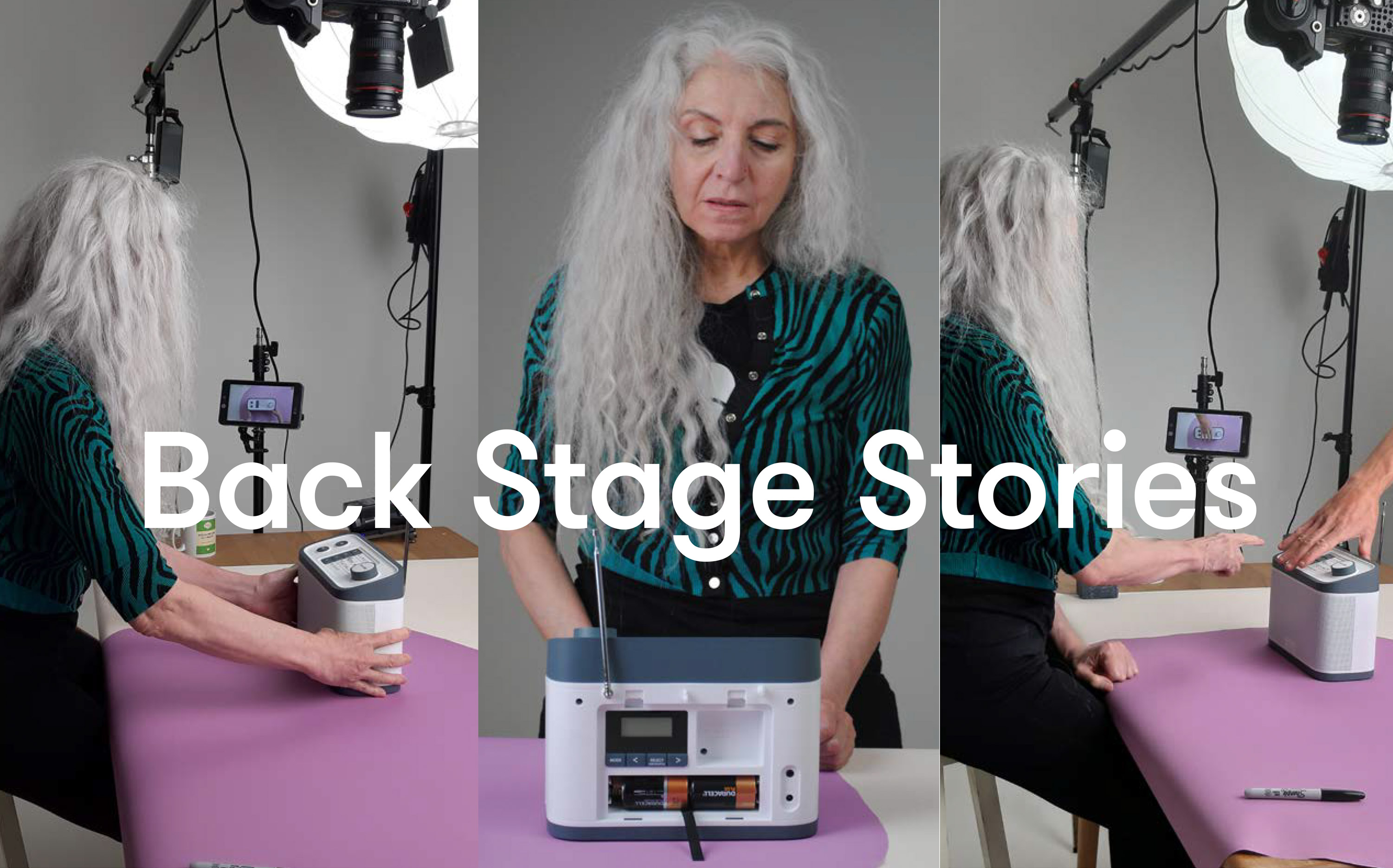
new relish videos and photographyAfter the website launch we decided it was time to invest on creating new content. To celebrate the launch of our new product, the dementia radio, we made a series of videos and studio photography, I was responsible for the concept, planning and art direction of three new product videos and studio photography.
Dementia Radio - Relish from Relish on Vimeo.
Product design:
From a physical to a digital interface
During my stay in Relish I had the opportunity to participate in the discovery and testing phases of some of their physical products’ design.
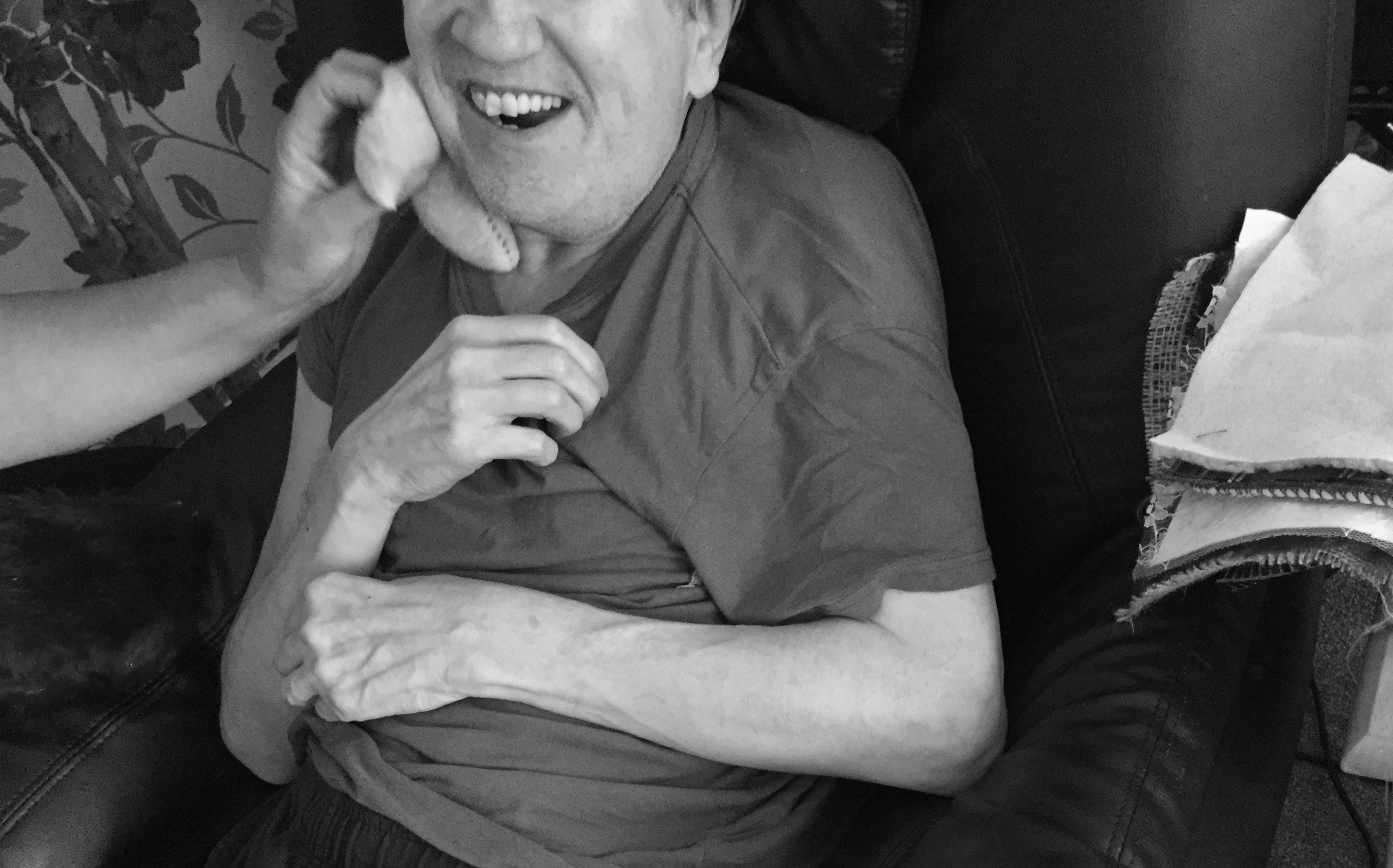
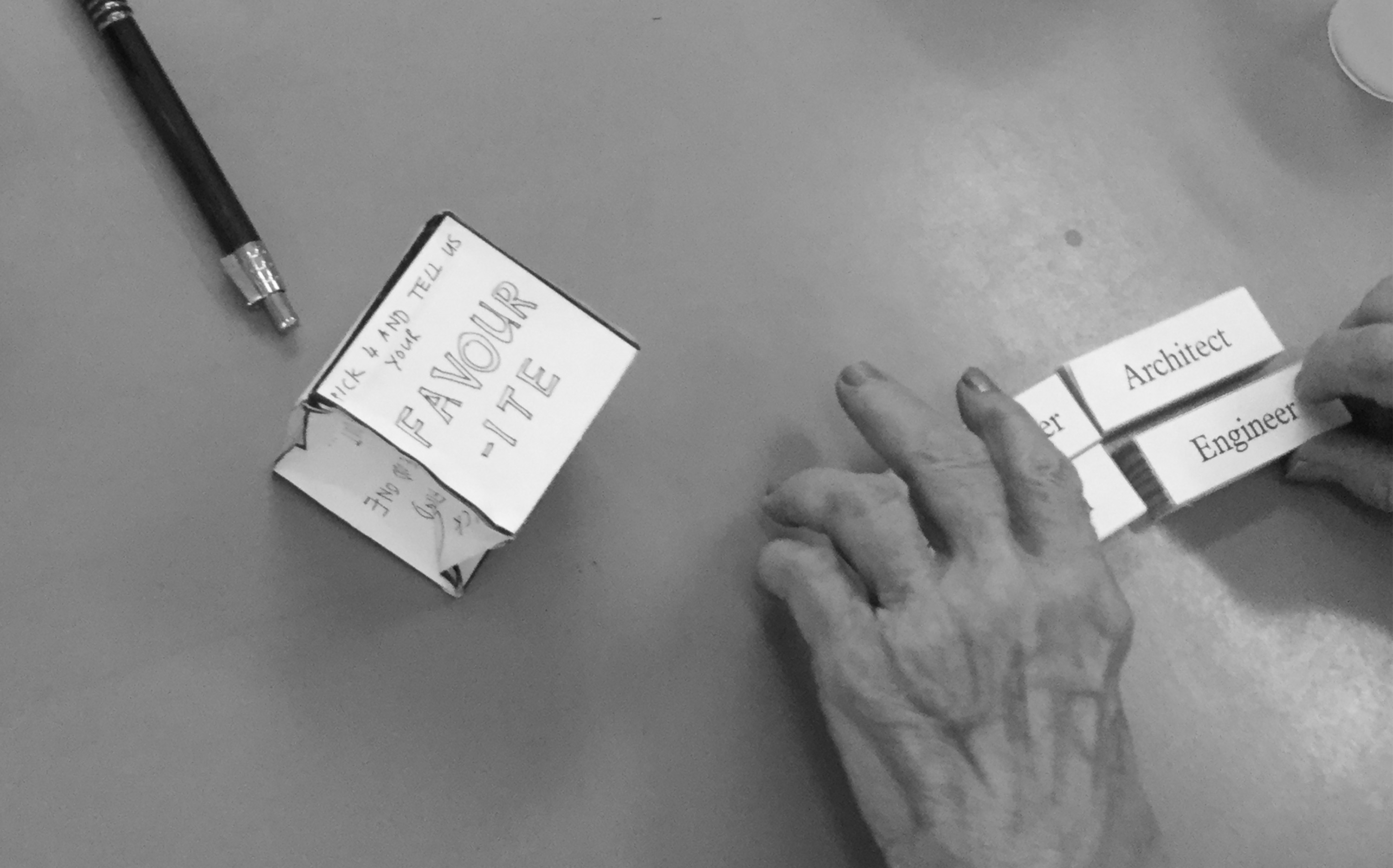
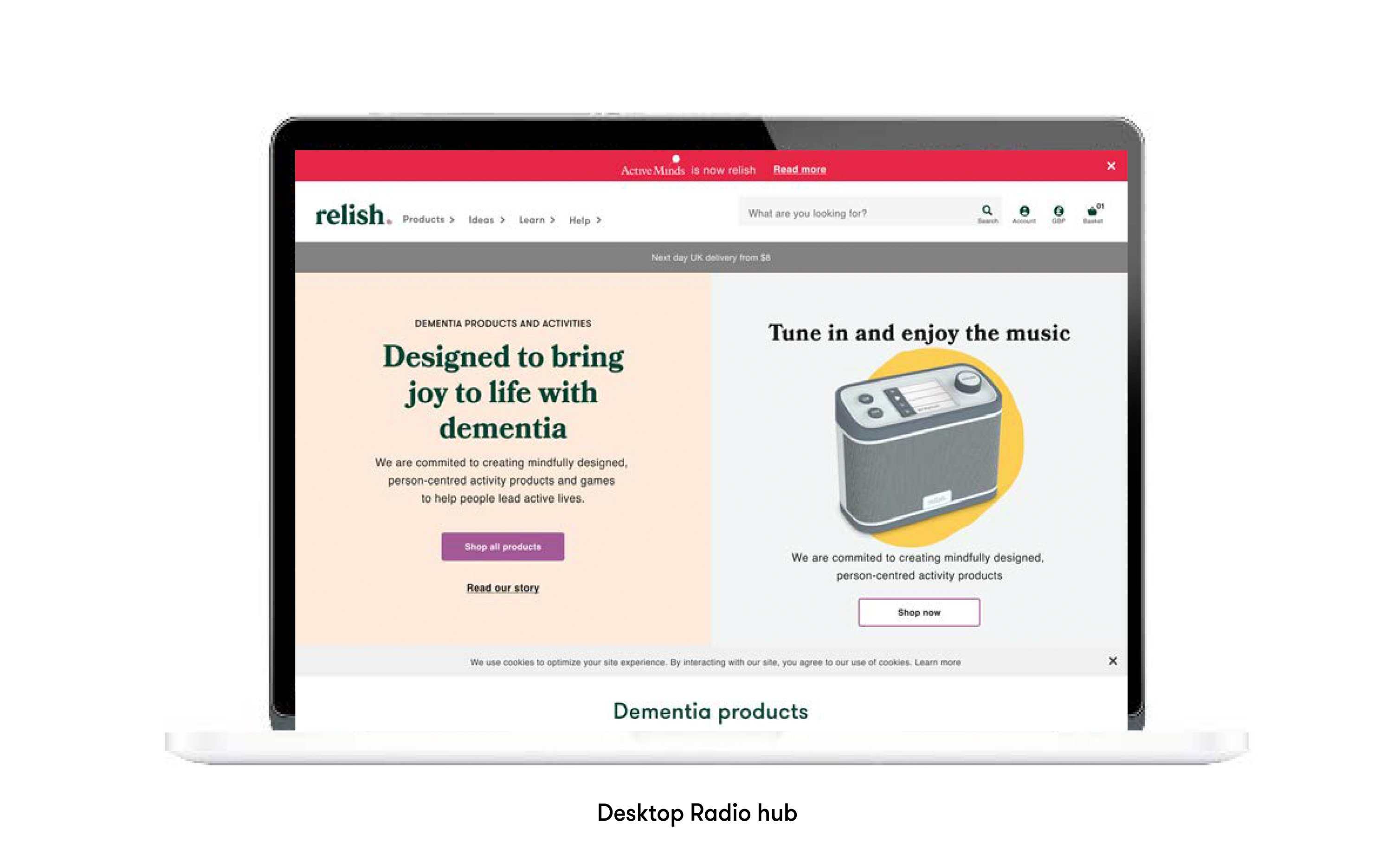
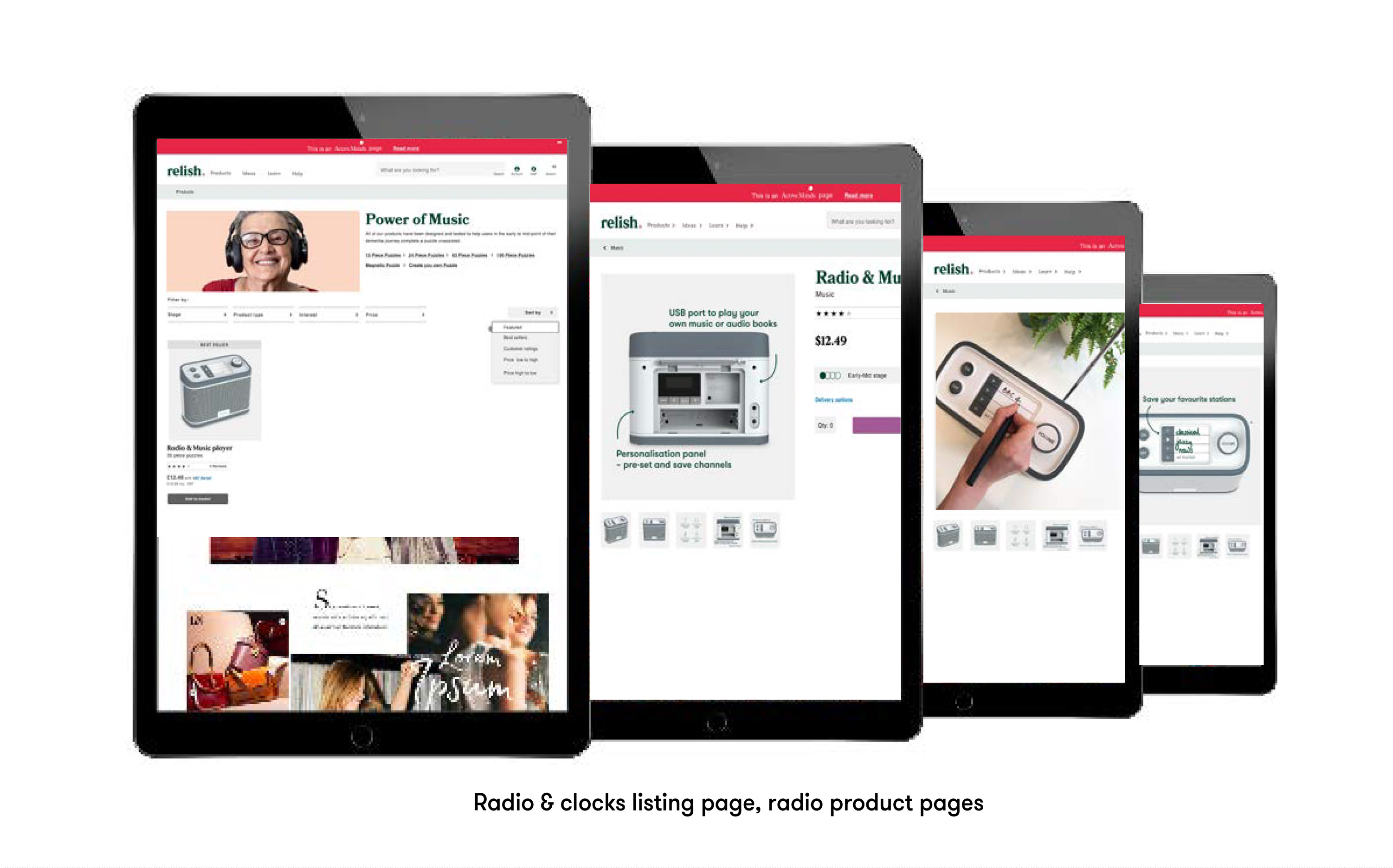
One of these products was the innovative radio for people with dementia. The idea for the radio was formulated during my research; the website search findings indicated that the radio appeared quite oftenas a search item. I had a talk with the CEO and marketing team and they thought it would be a good idea to involve this in their future product development plans.
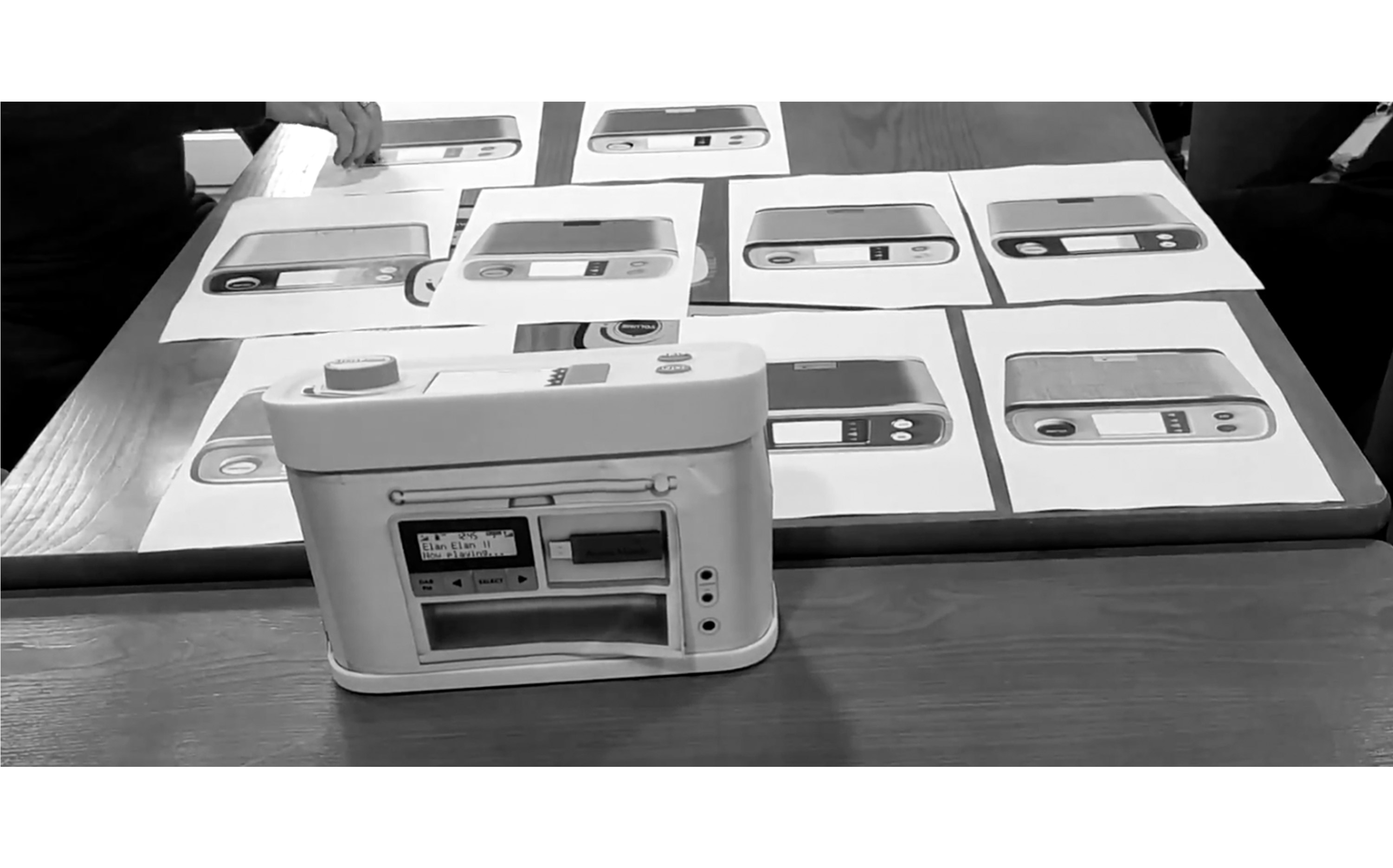
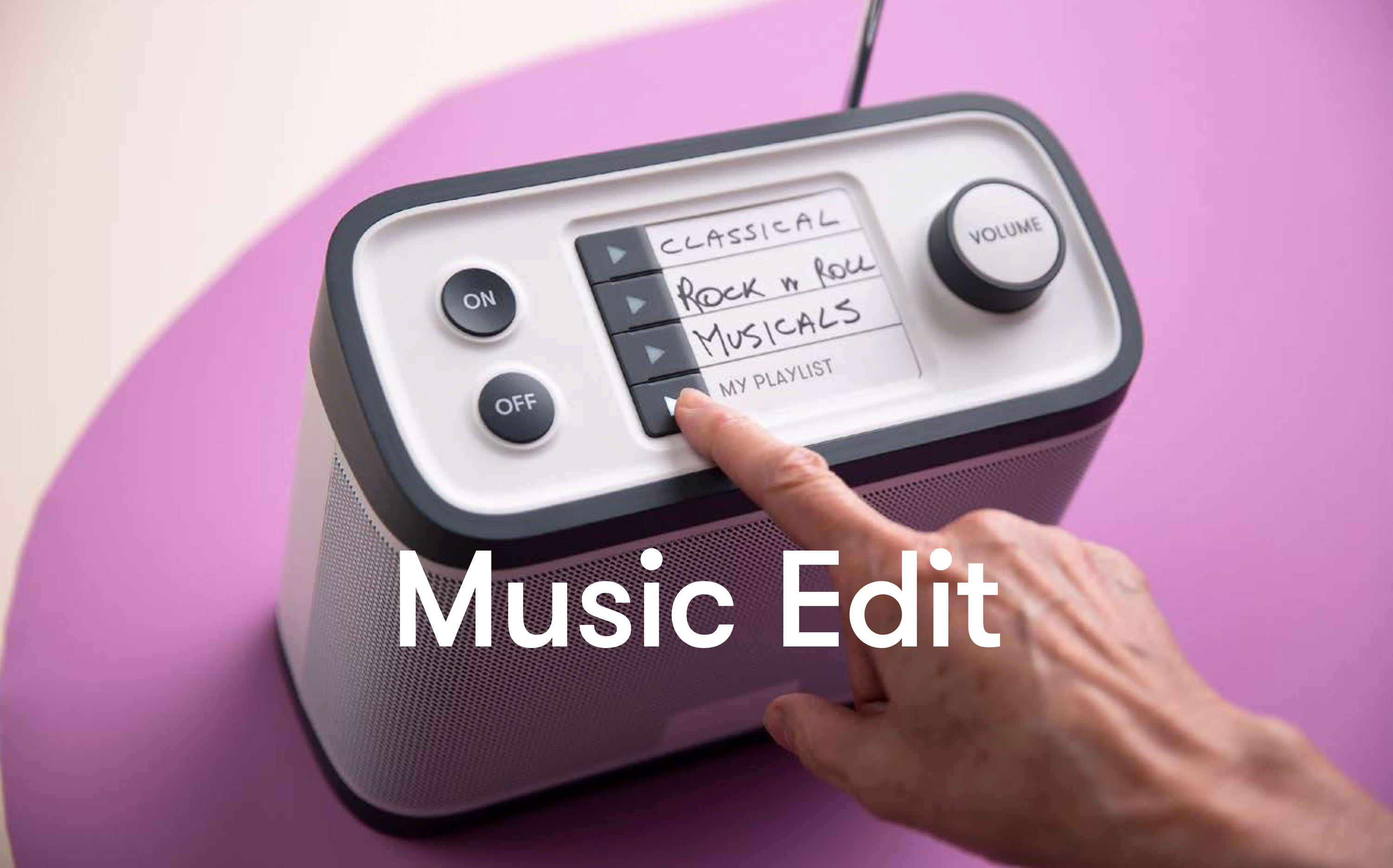
To make sure we communicate in the best light the product’s innovative features, I conducted interviews with the product design team to understand the usability of the product. They had an extended research compiled and the insights helped me form a design strategy. What made it stand out from the competition was the easy-to-use physical interface and the importance of music in the PWD wellbeing.
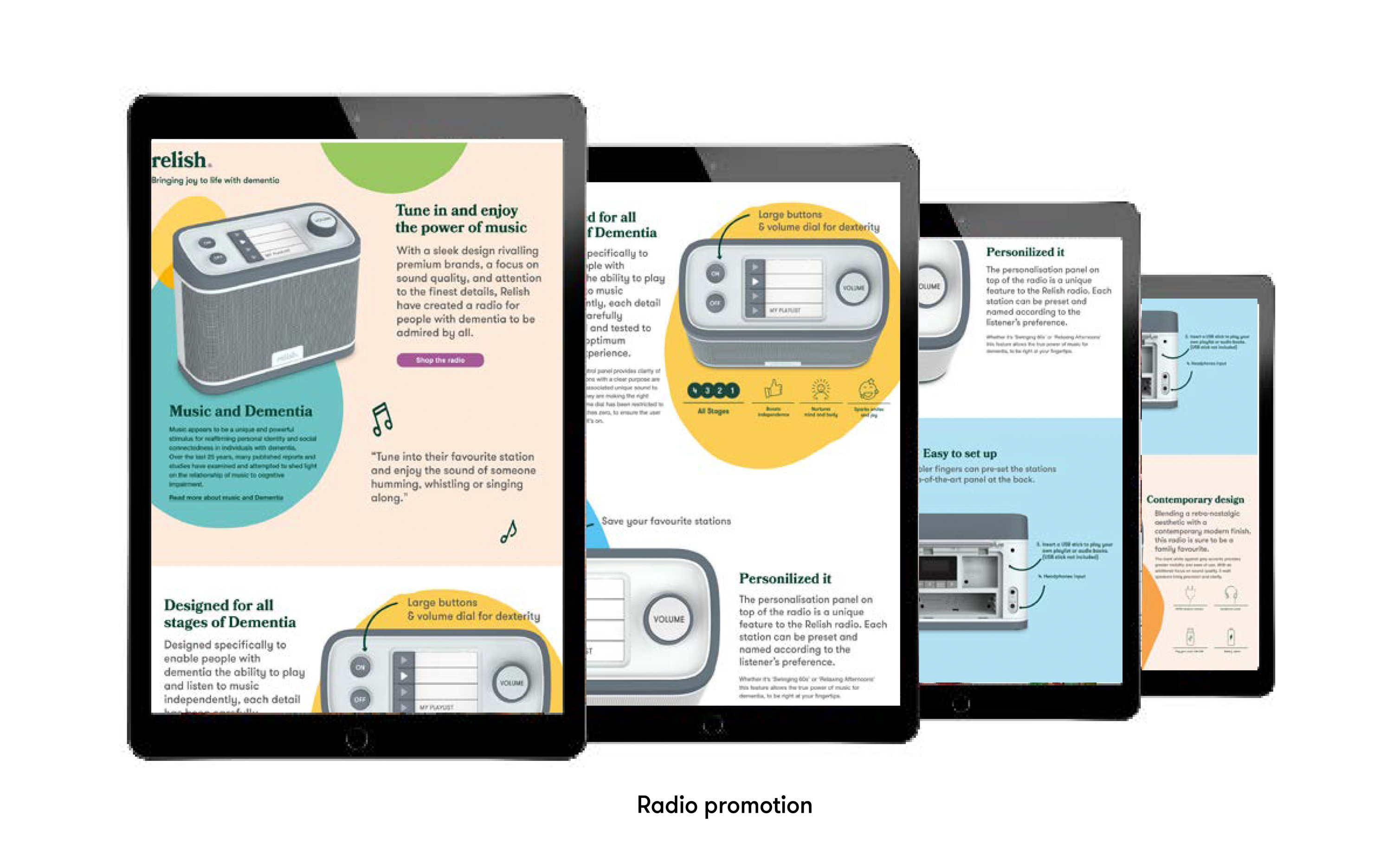
I created a journey map to find all the relevant touchpoints based on our consumer personas and divided the digital campaign into 4 stages. Each stage had its own content needs with a multichannel apporach to make sure we create relevant content.
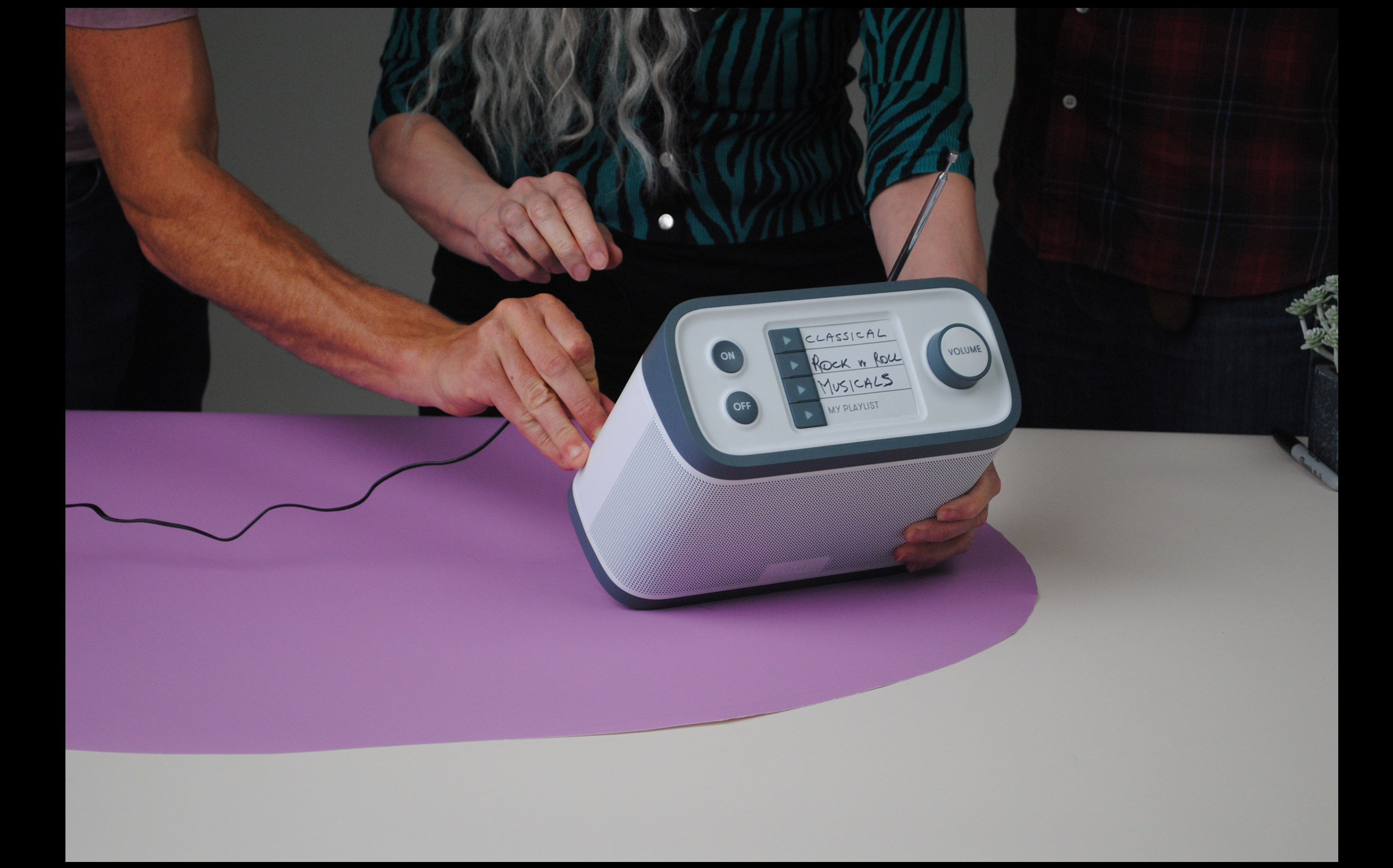
The focus was to explain the importance of music for dementia and the radio specialised features and benefits to the Relish consumers in an engaging visual way across different channels.
The visual concept based on the use of the organic shapes, one of the key elements of the Relish visual identity. The shapes give a playful and joyful look to a specialty product promotion.