Empowering a newly formed team through Discovery
Guiding a brand-new mixed-agency product team through their first discovery sprint, building shared understanding, confidence, and a clear roadmap for the next quarter.
When a new product team was formed, including contractors from multiple partner agencies , there was no shared context, no established working rhythm, and uncertainty around the problem space.
My Role
I designed and facilitated a two-week Discovery Sprint, combining research insights, collaborative activities, and structured ideation to align the team and define a clear set of priorities and outcomes for the next three months.
Outcome
This work helped build team cohesion, clarified strategic direction, and resulted in a validated roadmap grounded in real user needs and business goals.
Understanding the challenge
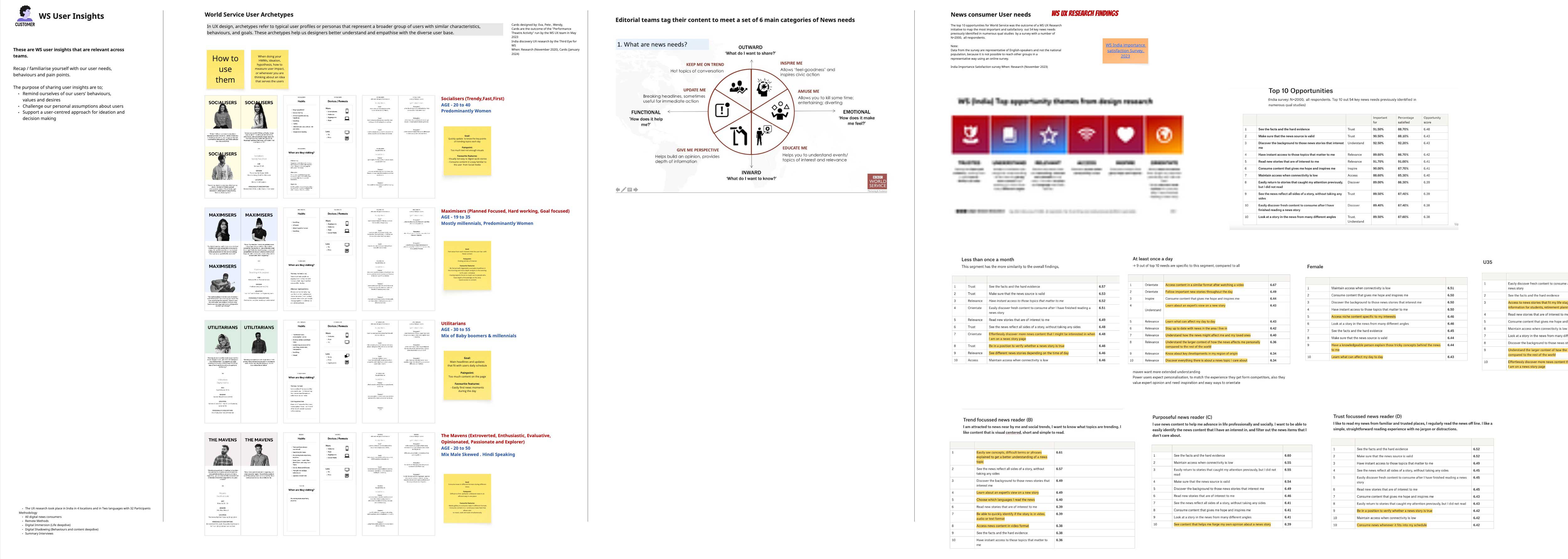
Week one: Exploration & Framing
Expert talks and user archetype presentations, behavioural trends, and service-specific pain points explained.
We began by grounding the team in our global audience context. I introduced World Service user archetypes, recent behavioural trends, and pain points observed across languages and platforms. To support varying learning and processing styles, I presented insights using text, diagrams, short video clips of real user behaviour, and audio interview excerpts.
This allowed the team to empathise with user challenges and avoid assumptions based on familiarity or personal bias.
The problem space included SEO, Ad tech and Progressive Web App as an alternative entry point, all of which were already defined as main opportunities for the World Service.
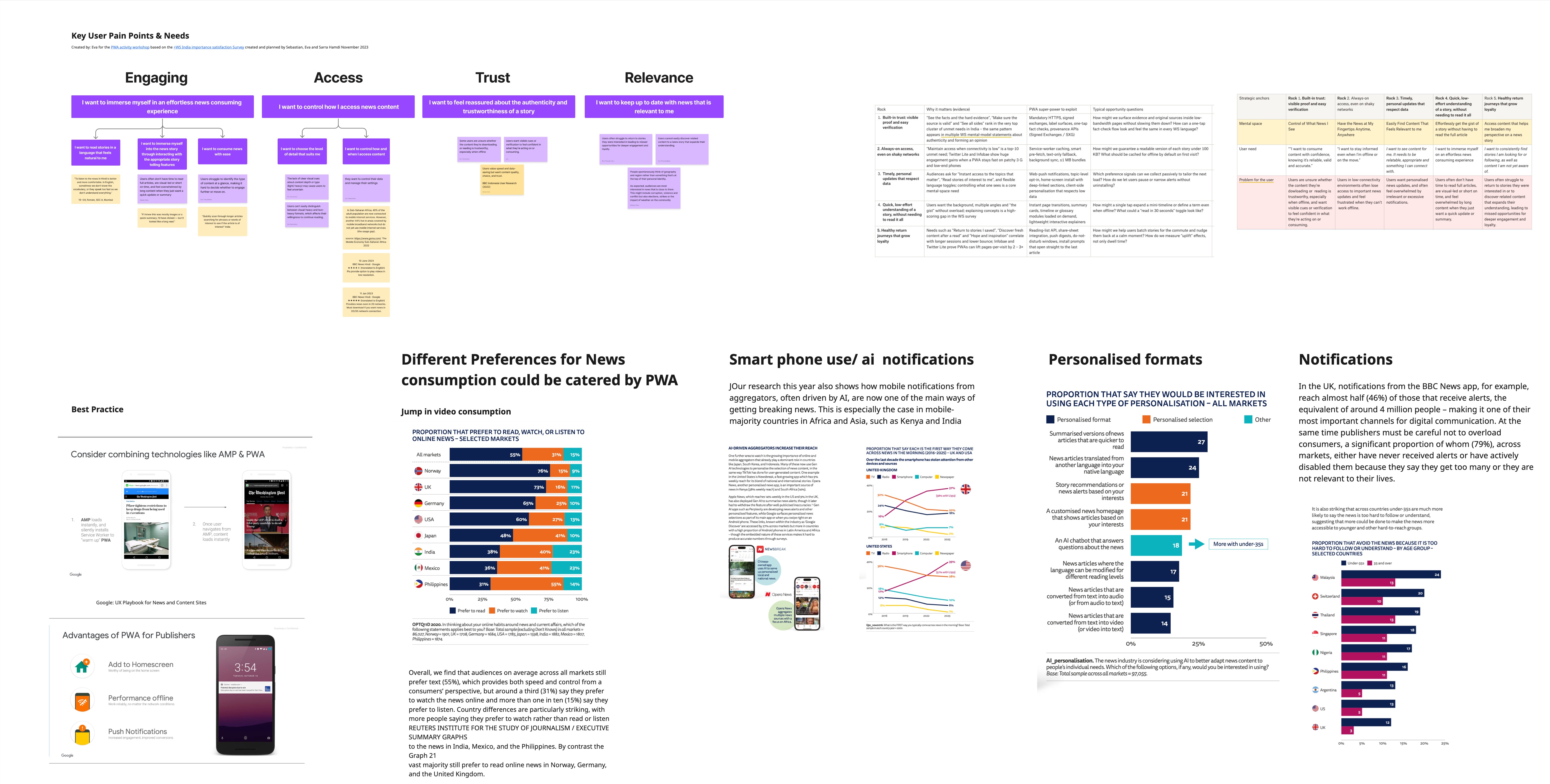
Week one: Multimedia materials: videos, audio interviews, visual quotes.
The Process
Mapping Opportunities
We split into three sub-teams and mapped pain points against user behaviours and business goals. I facilitated structured ideation using How Might We framing to convert challenges into design opportunities. I prepared illustrated “how to” guidance boards to support confidence and help engineers and contractors engage meaningfully.
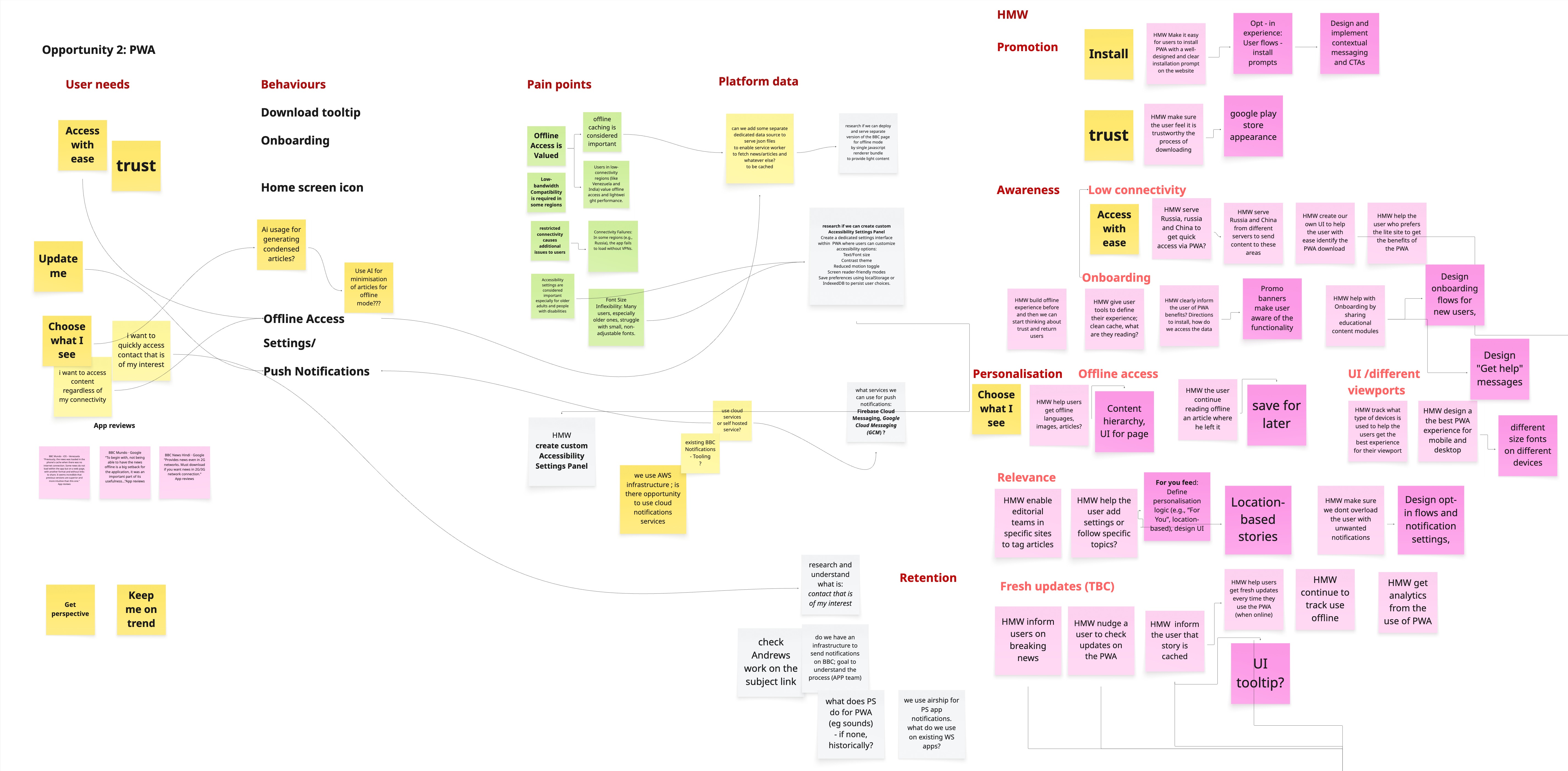
Week one: Thematic breakout teams with curated Miro boards.
“How Might We” activity to frame opportunities from user pain points.
“How Might We” activity to frame opportunities from user pain points.
Generating Solutions and prioritisation
By week two, the team generated a wide set of solution directions, which we evaluated for feasibility and impact.
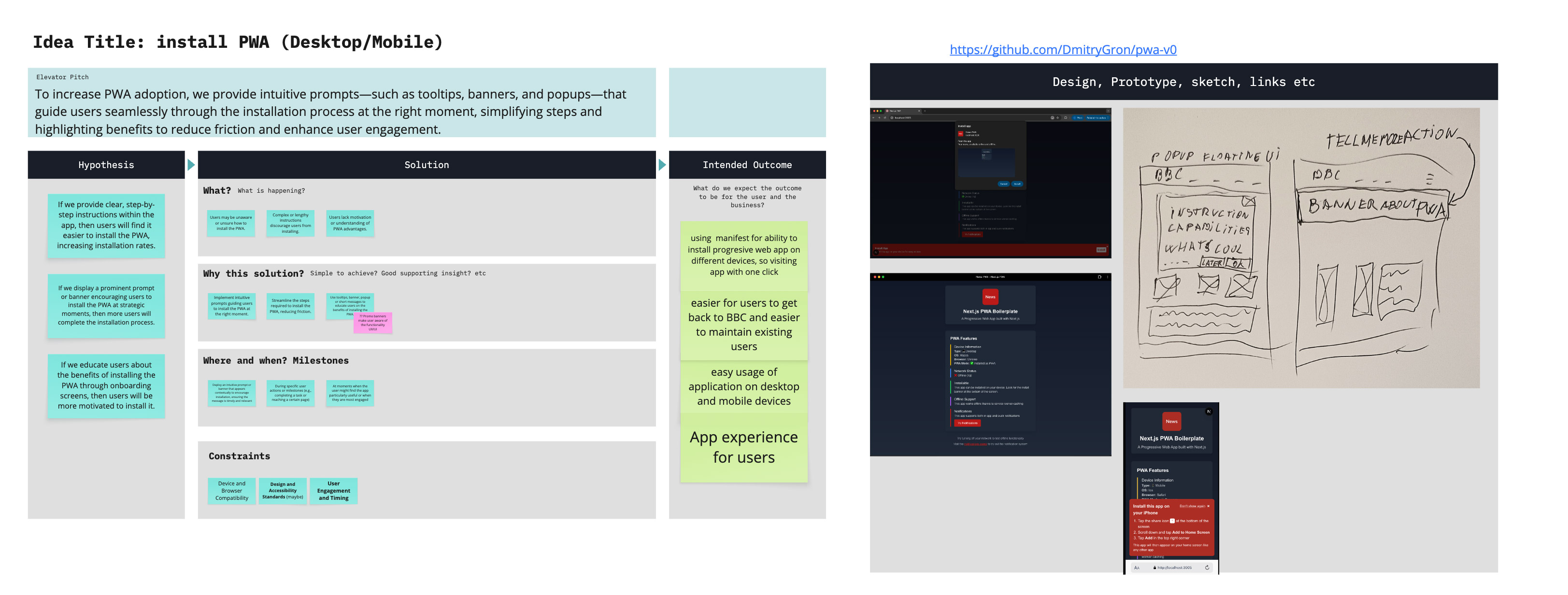
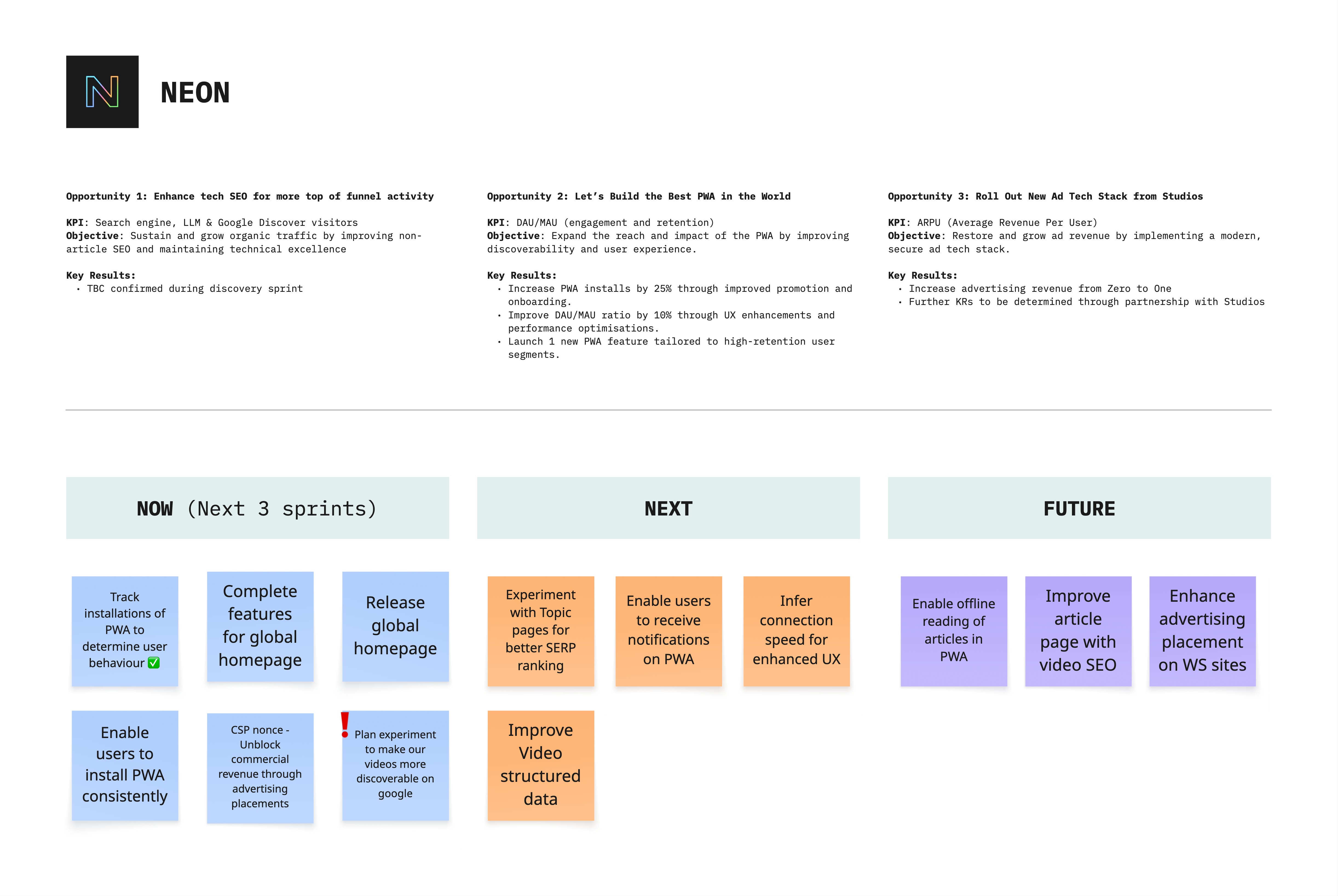
Clear roadmap, renewed confidence, strong team cohesion
By the end of the sprint, the team had defined a prioritised set of initiatives tied to measurable audience and business outcomes, forming our roadmap for the next three months. Engineers who had initially been sceptical of design-led activities became strong collaborators and advocates of the process.
The sprint also established shared language, trust, and momentum, enabling us to move into delivery with clarity and purpose.